
The Notebook at the Peace Center
North Carolina novelist Nicholas Sparks launched his career as a best-selling writer of romantic novels with The Notebook in 1996, and I’d guess that it remains his most-beloved work. Among the 11 films based on Sparks’ books, it’s also The Notebook (2004) that’s been the most successful.
Now there’s The Notebook: The Musical, of which the Broadway touring company is at the Peace Center in Greenville, S.C., this week. No previous Sparks experience is necessary to enjoy the show, but for fans — whether casual or dedicated — the stage adaptation provides a new approach to the material that’s unique to this format: Three incarnations of the central couple, from different periods in their lives, co-exist onstage, creating a special resonance that underscores the impact of time on a lifelong romance. The opening number, called simply “Time,” makes this sentiment charmingly clear.
For the uninitiated, the titular notebook is a handwritten account of the love affair between Noah and Allie. In the present day, the notebook is read aloud by an elderly Noah (Beau Gravitte) to his Alzheimer’s-afflicted wife, the also-elder Allie (Sharon Catherine Brown). Teenage Noah (Kyle Mangold), a charismatic high-school dropout who works at a lumber mill, meets young Allie (Chloë Cheers) one summer when Allie’s wealthy family is staying at a vacation home somewhere along the Carolina coast. Not surprisingly, Allie’s parents (Anne Tolpegin and Jerome Harmann-Hardeman) disapprove, and the summer ends unhappily — setting up a reunion a decade or so later between a more mature Allie (Alysha Deslorieux) and Noah (Ken Wulf Clark). In between has come a war (originally World War II, now Vietnam) and Allie’s engagement to another man.
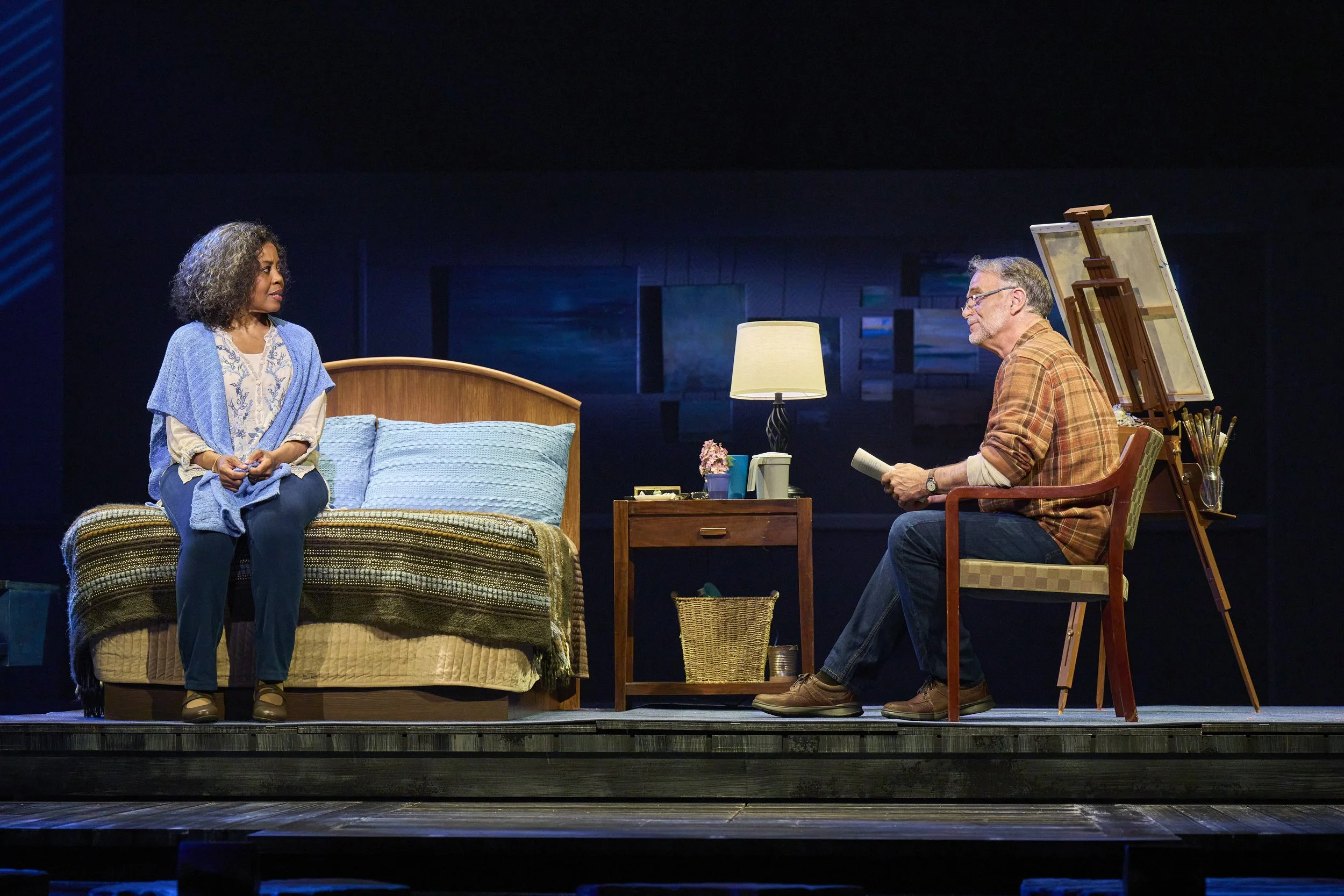
Sharon Catherine Brown (Older Allie) and Beau Gravitte (Older Noah) in a scene from The Notebook: The Musical.
The gimmick of the novel and the movie, in which elderly Noah is called Duke and the fact that the notebook is his own love story is only gradually revealed, is replaced here with the conceit that the couple’s earlier incarnations exist chiefly in Noah’s memory. It’s a smart restructuring of the story, which is, after all, about both the power and the failings of memory. It also means that the six-person principal cast not only has to relate as couples within the three timeframes, but also bond across the ages with their doppelgängers. It’s a dual challenge that this able ensemble achieves seamlessly.
It’s a blessing that the cast is so strong, since the production design is best described as, well, muted. The furnishings that slide on and off are all dandy, but Noah’s majestic renovation of a coastal mansion is represented by a backdrop of windows that don’t light up (despite a song called “Leave the Light On”) and a door that doesn’t open (which makes some crucial entries and exits rather awkward). And whatever those several dozen Walmart-worthy tubular lights that hang vertically above the stage are supposed to accomplish other than distraction was lost on me. (Romantic starlight they are not.)
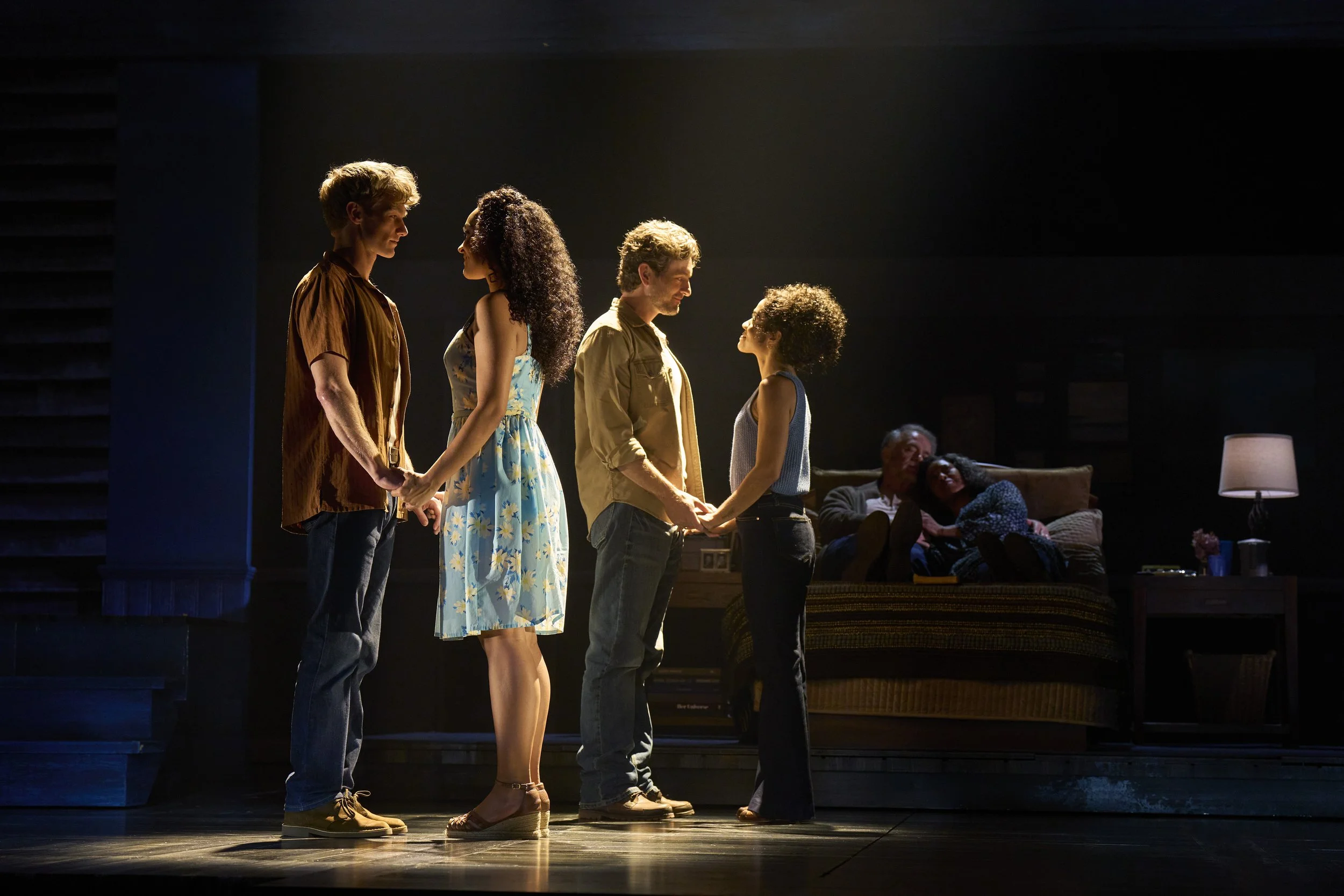
From left: Kyle Mangold (Younger Noah), Chloë Cheers (Younger Allie), Ken Wulf Clark (Middle Noah), Alysha Deslorieux (Middle Allie), Beau Gravitte (Older Noah), and Sharon Catherine Brown (Older Allie) in The Notebook: The Musical.
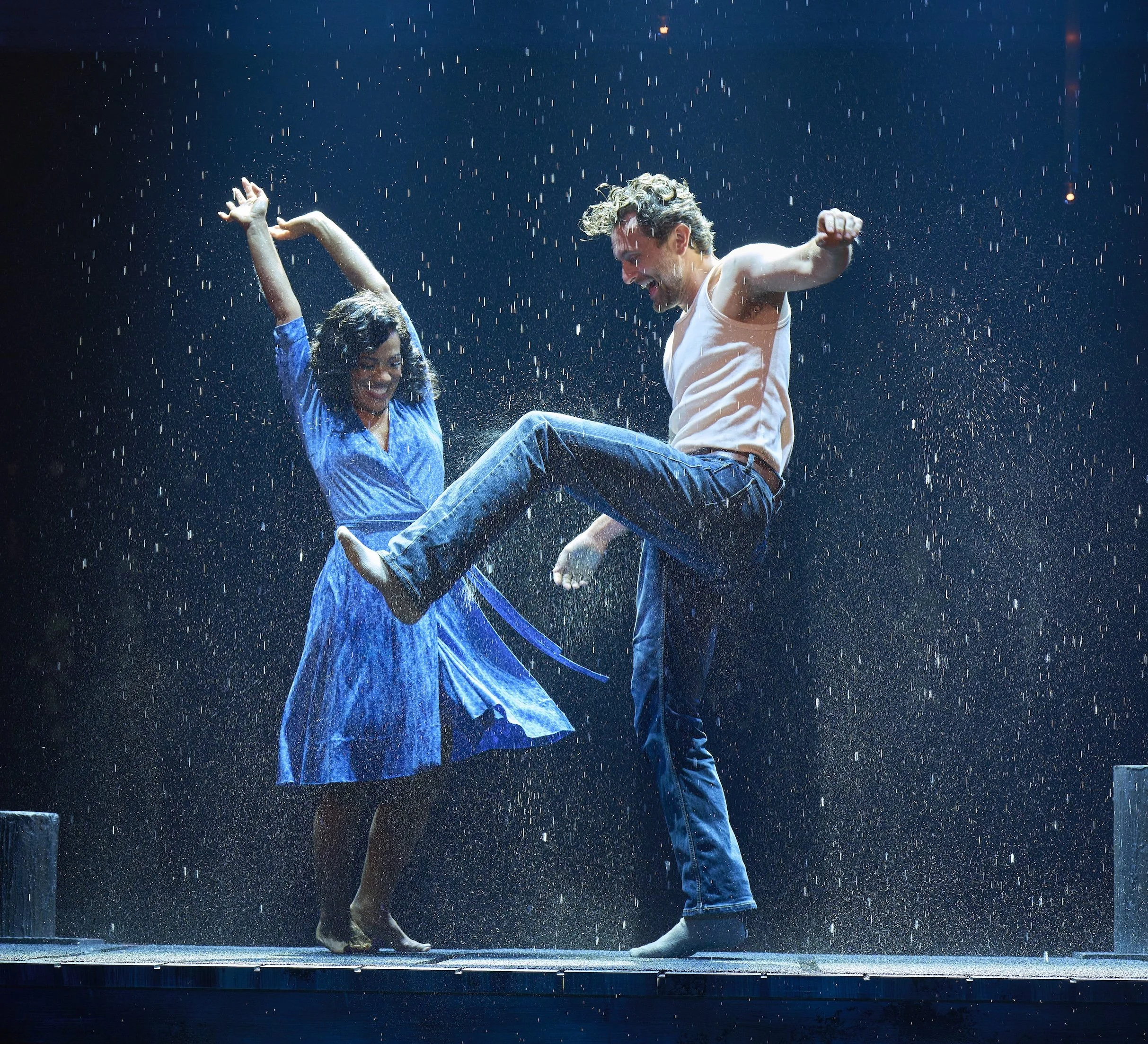
This is not to diminish the staging, as directors Michael Greif and Schele Williams do a generally masterful job of shifting from era to era and, even more impressively, smoothly overlapping timelines in revelatory ways. And that romantic scene in the rain from the movie? It’s a highlight of Act Two, complete with an actual downpour.
Music and lyrics for The Notebook are by singer/songwriter Ingrid Michaelson, and the songs fall into that post-Les Miserables style that straddles the line between dialogue and melody. The tunes are pleasant but strive more to magnify the emotions of the storytelling — with gentle tuneful fragments and occasionally soaring vocal apogees — than to create freestanding pop songs. The result is a bubbling current of lush musical ideas (and songs with curiously generic titles) that now and then break out into poignant wit (“Forever”) or powerfully felt anthems (Deslorieux’s powerhouse delivery of “My Days”). Some of the tunes do stand on their own as self-contained and touching statements: “If This Is Love,” for example, is not only a standout duet for Deslorieux and Cheers in the show, it’s also a standout track on Michaelson’s 2024 solo album, For the Dreamers.
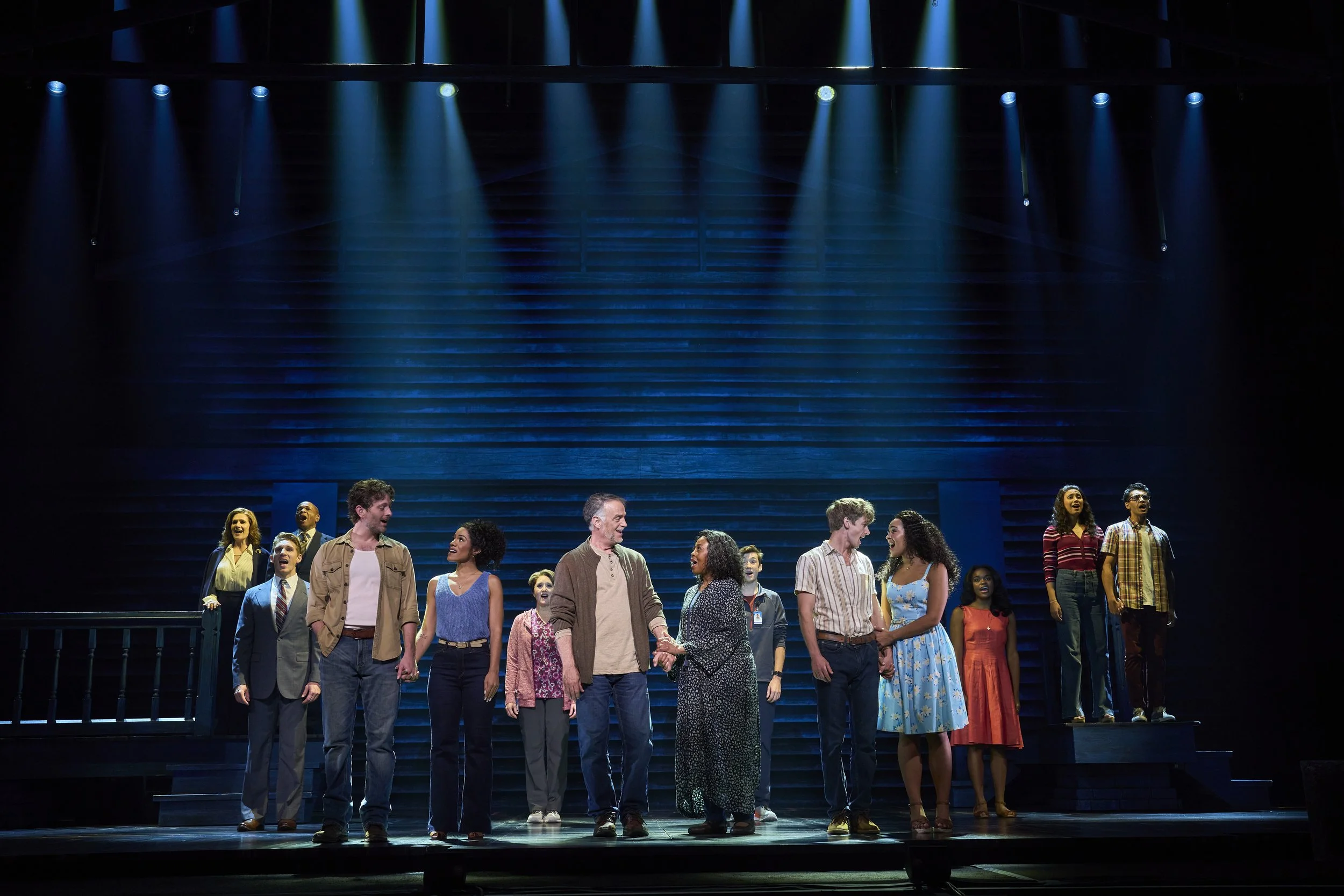
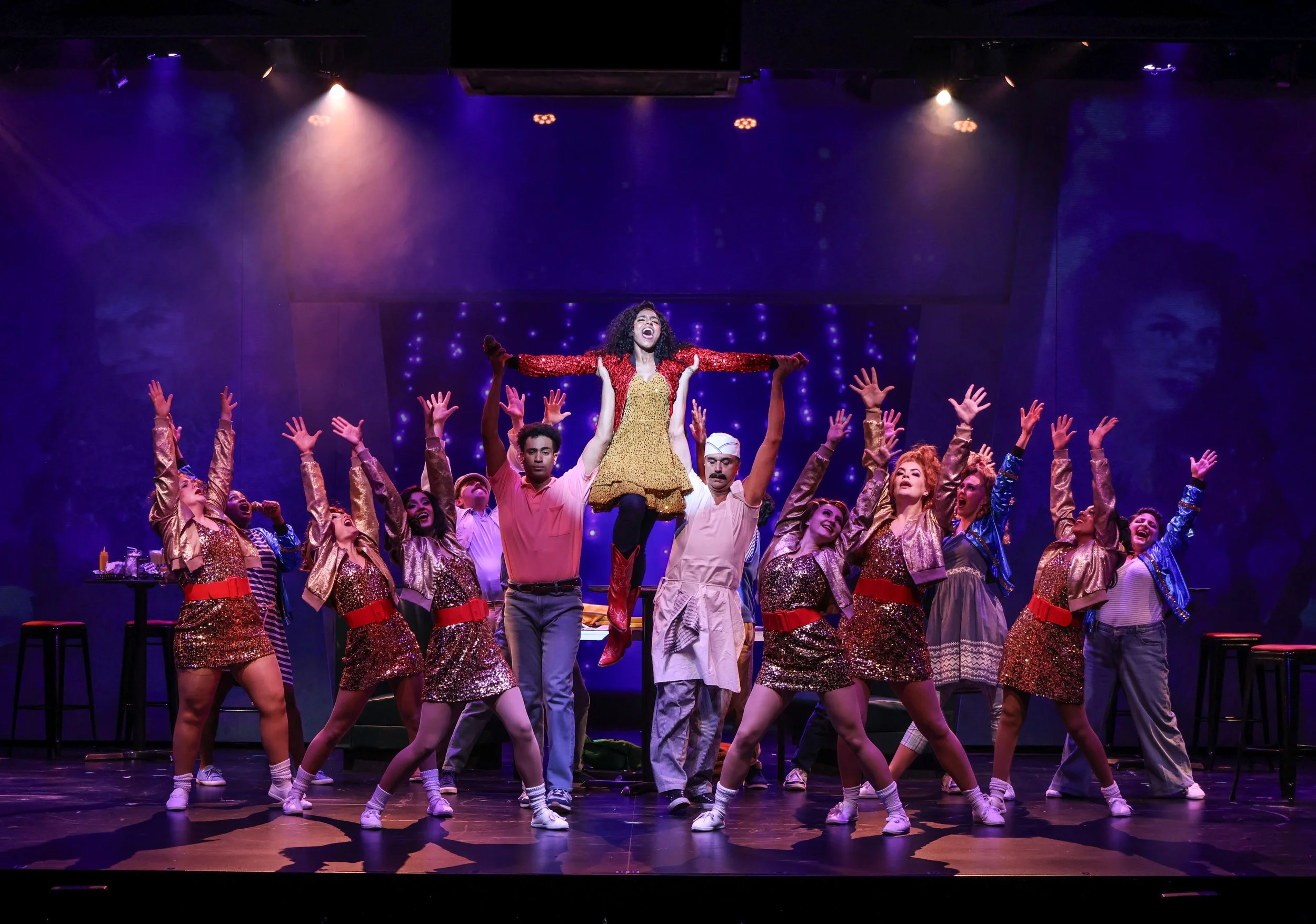
The full ensemble for the North American Tour of The Notebook: The Musical.
But the seven-person orchestra, led by keyboardist and conductor Tina Faye — no, not that one — sounds full and sweet throughout, and the blend of voices among the Allies and Noahs is always thrilling. The more cast members onstage, particularly for each act’s opening and closing, the better.
However Notebook fans might judge the changes the show makes to their beloved story, no one can deny the emotional power of its conclusion, which leaves the audience on their feet, applauding as they blink away tears.
The Notebook is at the Peace Center through June 14. For tickets and more information, visit peacecenter.org.
(Photos by Roger Mastroianni, courtesy of the Peace Center)
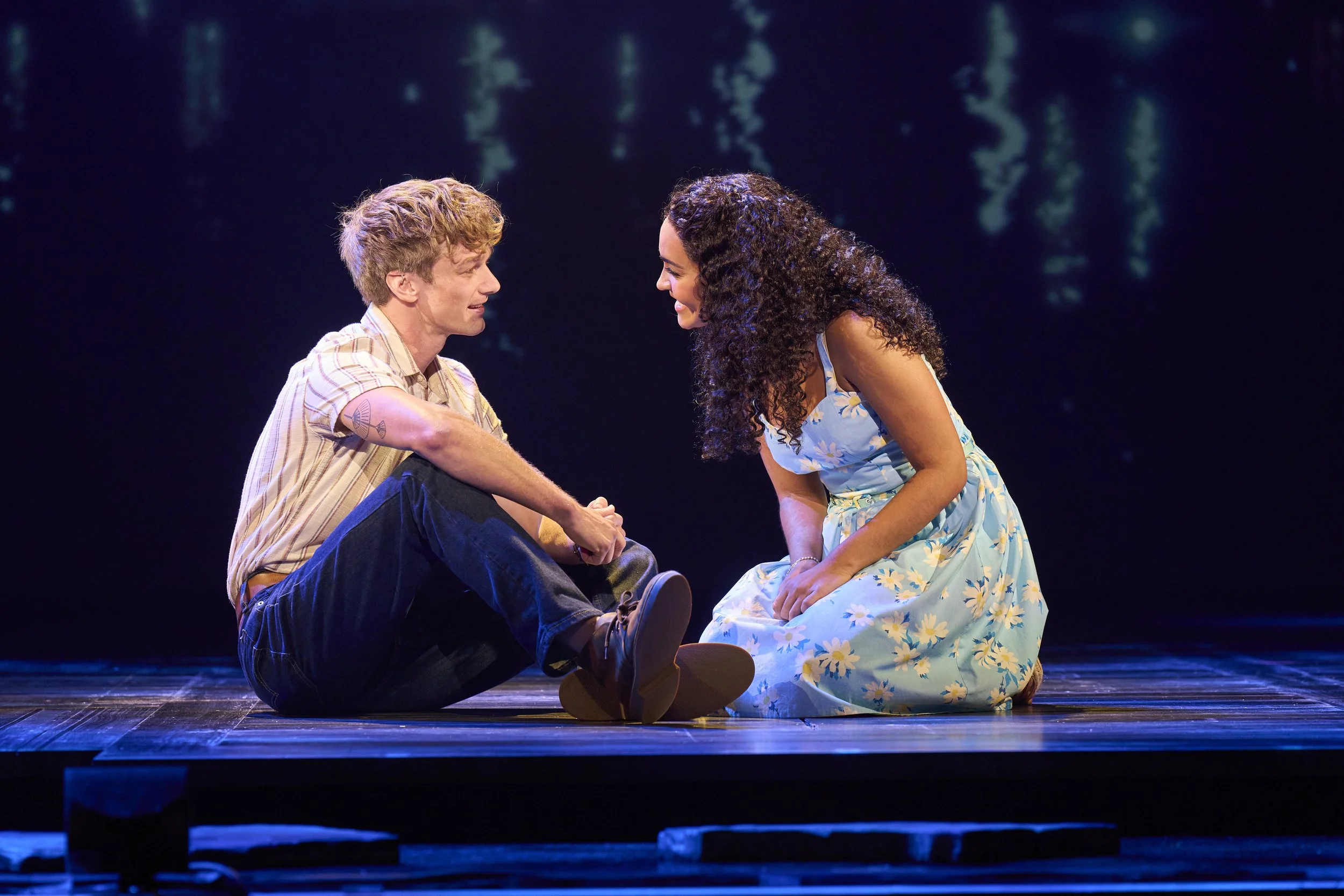
Kyle Mangold (Younger Noah) and Chloë Cheers (Younger Allie) in a scene from The Notebook: The Musical.