
The Great Gatsby at the Peace Center
Almost from the moment of its first publication in 1925, F. Scott Fitzgerald’s concise and eloquent masterpiece of a novel, The Great Gatsby, has been adapted more times than it seems possible to count: for stage (both plays and musicals), for radio, for film, for television, for opera, and even for pop music (e.g., Eric Carmen’s underrated 1977 song “Boats Against the Current”). In every instance, critical debate rages as to whether the adaptation lives up to the original.
The musical production that opened on Broadway in April 2024 (and is still running) is no different, and the national tour incarnation has now reached Greenville, South Carolina. But I’ll spare you the “Is it faithful?” exercise in favor of another: What’s unique to this production that even adamant Gatsby fanatics (such as myself) can point to as adding insight or just plain fun to the franchise?
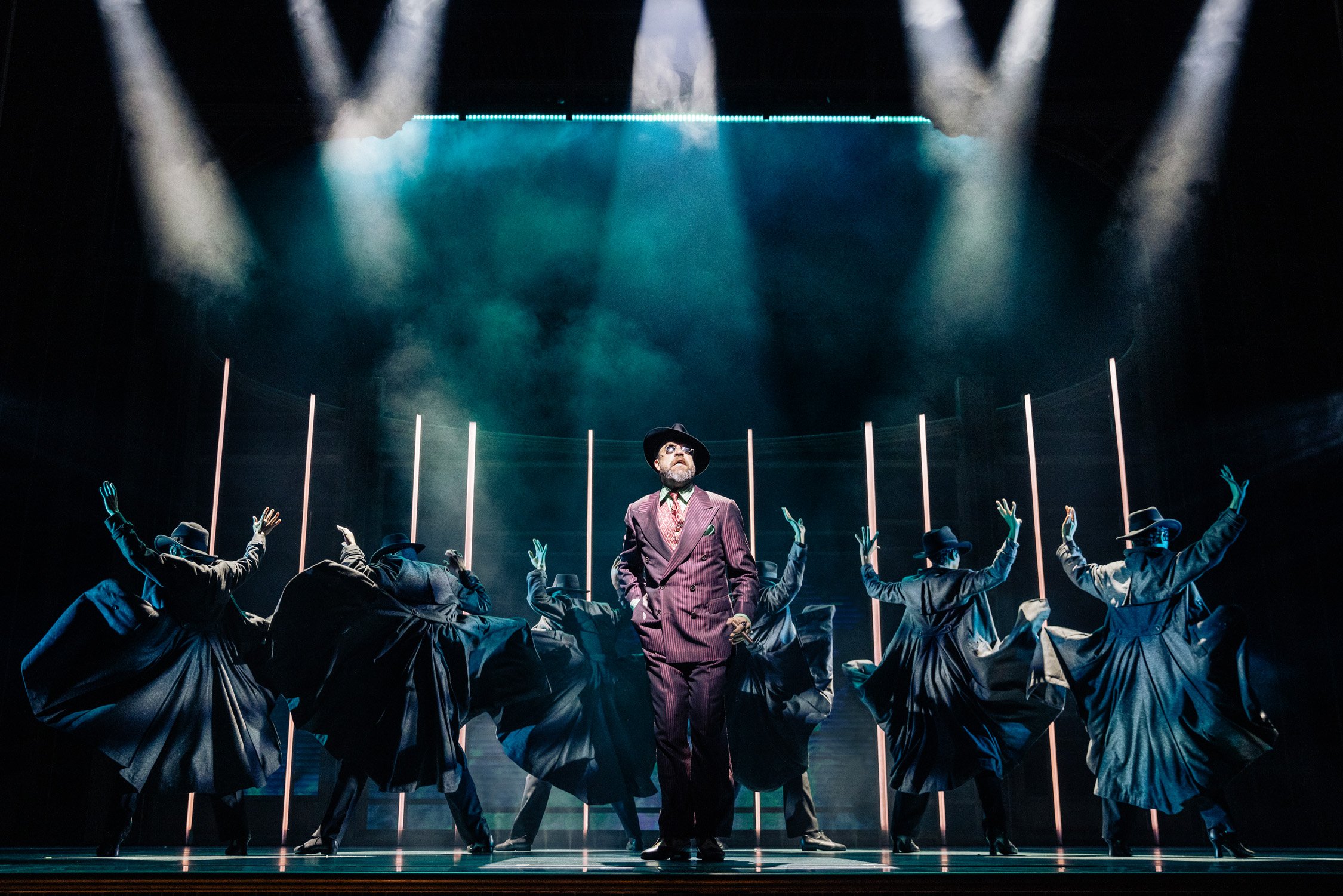
The song “Shady” from The Great Gatsby. The photo depicts Eric Anderson, from the original Broadway cast.
For me, the spirit of this show is captured in a most unexpected way: a song delivered by Meyer Wolfsheim (Edward Staudenmayer) to open Act II. Wolfsheim is a shady, secondary character in the book — a gangster (inspired by the real Meyer Lansky) whose bootlegging and other criminal enterprises somehow account for the wealth of the title character, Jay Gatsby. The song, “Shady,” asserts that everyone “gets in bed” with someone “a tiny bit shady,” equating Wolfsheim’s illegal schemes with Gatsby’s illicit affair with his one-time sweetheart, Daisy Buchanan; Daisy’s husband Tom’s two-timing with flapper wanna-be Myrtle (wife of a service station owner); Daisy’s cousin Nick’s excursions with both selling dubious bonds and wooing golfer Jordan Baker — in other words, the whole ethos of the over-the-top Roaring ‘20s. It’s a clever song and it frames the show in the light of what we in the audience know that the characters do not — there’s a price to pay for all our indiscretions, whether the personal tragedies of Fitzgerald’s narrative or the 1929 stock market crash and subsequent worldwide Great Depression that would eventually wipe away all the joys and excesses of the decade. Making Wolfsheim a kind of temporary Stage Manager, taking it all in, is inspired, and Staudenmayer delivers the song with aplomb.
For musical chops, though, Staudenmayer is outdone by Joshua Grosso, who plays Nick, and nails the scene-setting opening song, “Roaring On,” with a powerful voice that immediately grabs the audience’s attention. The song also kicks off (literally) the show’s bouyant and exciting choreography (by Dominique Kelley), which never fails to thrill. Similarly jaw-dropping is the Art Deco-inspired production design (by Paul Tate dePoo III), which seamlessly combines flying flats and more substantial set elements with gorgeous projections to create seemingly dozens of richly imagined locations. Oh, and period cars drive on and off the stage with some frequency. For a touring show, especially, it’s all quite amazing.
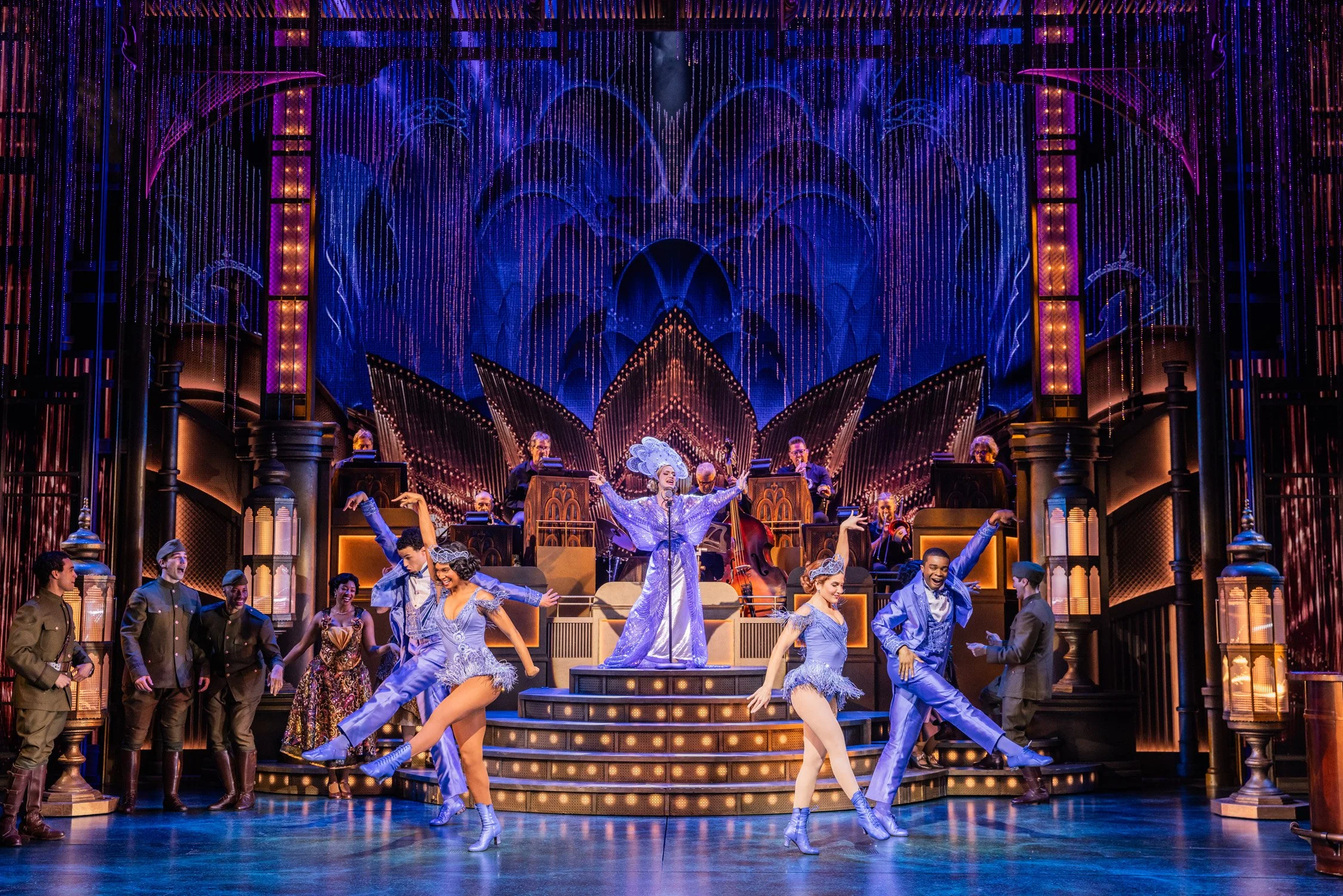
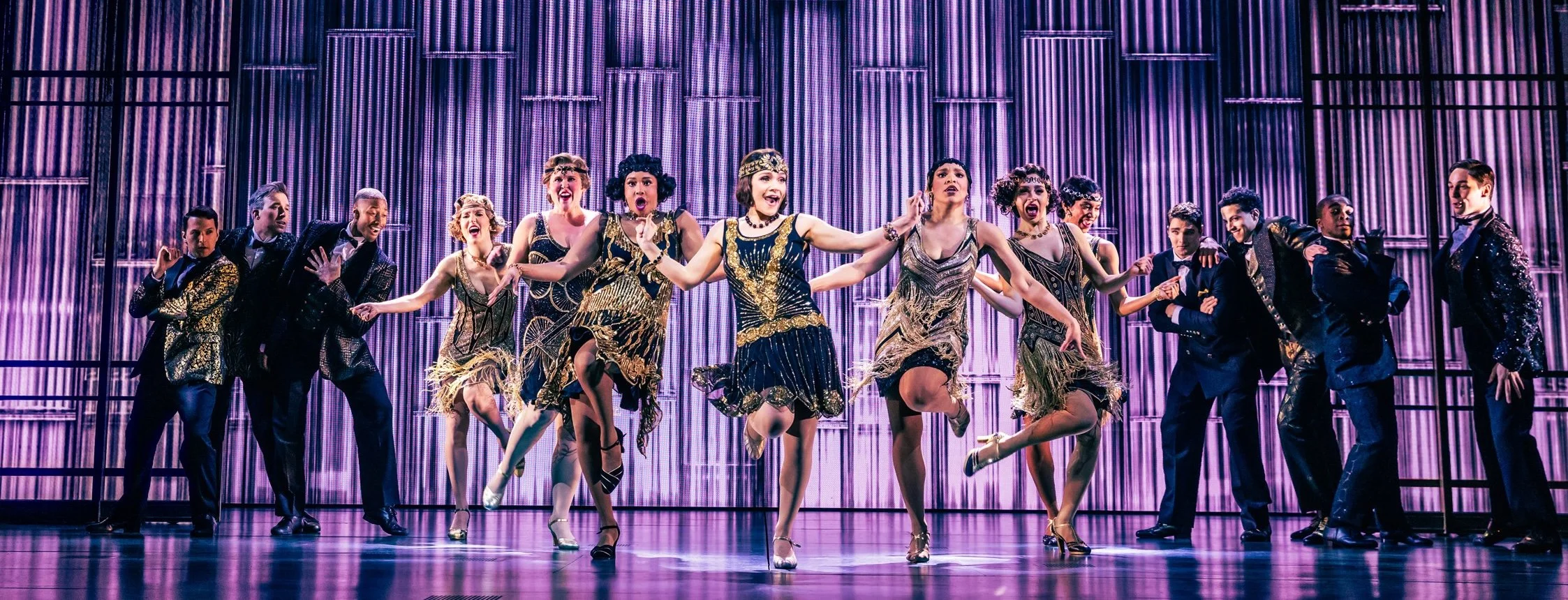
The song “La Dee Dah With You” from The Great Gatsby. The photo depicts the original Broadway cast.
Most of the songs are effective in their storytelling, although composer Jason Howland and lyricist Nathan Tysen lean heavily into current-Broadway formula, rather than taking much advantage of the possibilities of the Jazz Age setting (save for the arrangements foregrounding of the brass section). The ensemble numbers are big and buzzy, while the more individual anthems all tend to build to sustained high notes — volume and pitch as none-too-subtle markers for emotion. The one number that’s solidly grounded in the period is “La Dee Dah With You,” delivered by Gilda Gray (Joann Gilliam), who’s a famous jazz singer in the context of the show. The extravagant and joyful tap-dancing that unfolds is a show highlight. (Unfortunately, the “La Dee Dah” lyrics were largely unintelligible — perhaps an opening night sound design glitch?)
I’m not sure how well newcomers to the Gatsby story will understand, say, the significance of the green light or the geographic connection between the Valley of Ashes and anywhere else, but the opening night crowd was peppered with gasps at the show’s violent finale, indicating both some newbies in the house and a degree of engagement with the musical’s story arc (the book is by Kait Kerrigan). Like so many adaptations, this one has trouble nailing a personality for Jay Gatsby (Jake David Smith), who here waffles between goofball, romantic, and delusional. Daisy (Senzet Ahmady) is more consistently realized, but it’s hard to think of these two as the show’s real leads, while Nick and Jordan (Leanne Robinson) are a more appealing and fully developed couple.
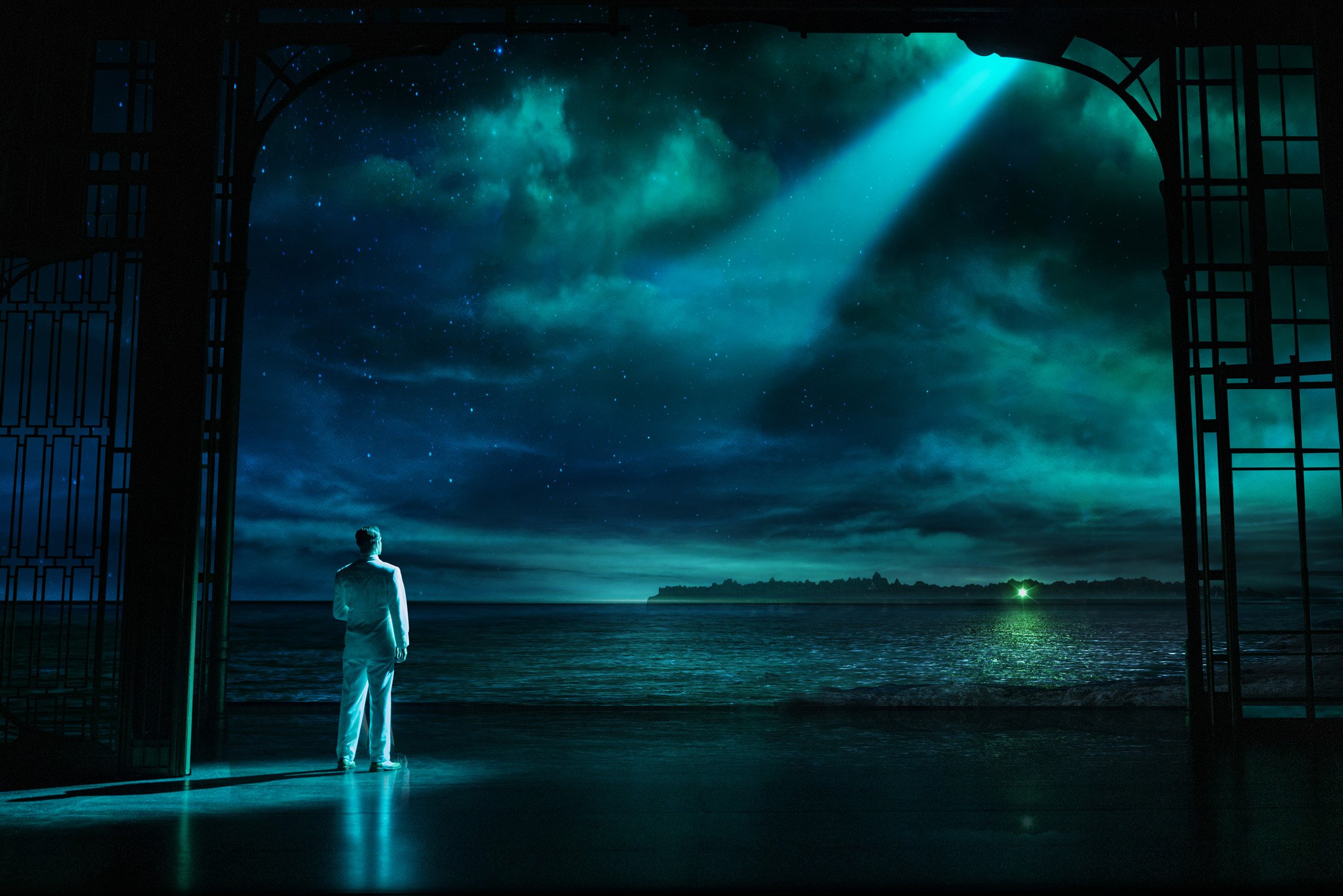
A scene from The Great Gatsby: A New Musical.
But no matter. The magic of Fitzgerald can’t be easily reproduced, yet the story remains captivating, and the show’s more inspired elements create magic of their own. There’s even a brilliant (mostly) comic number, “The Met,” delivered by Grosso, that reimagines one of the novel’s key early scene in a series of awkward-funny and awkward-awful plot points with clever lyrics that had me alternately laughing and wincing. Gatsby purists can pick apart the creators’ choices, of course, but the show is undeniably entertaining and often impressive.
The Great Gatsby: A New Musical is playing at the Peace Center through April 5. For tickets and more information, visit www.peacecenter.org.
Photos by Matthew Murphy and Evan Zimmerman, courtesy of the Peace Center.
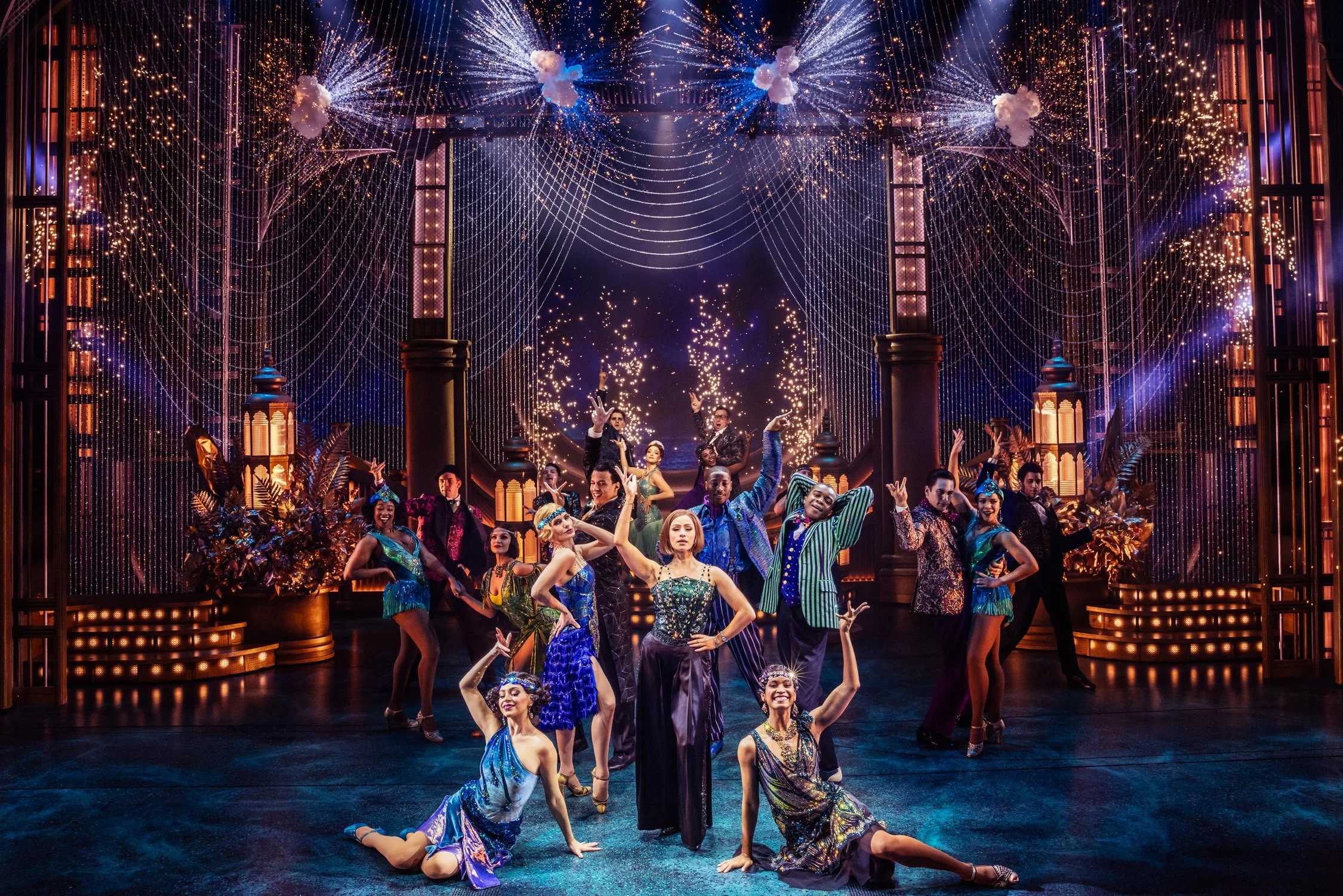
A scene from The Great Gatsby: A New Musical, depicting the original Broadway cast.