
Interview: Liam Kazar
Some artists step into their own immediately after picking up an instrument and putting pen to paper.
Liam Kazar isn’t one of them.
“I knew myself as a musician for a long time, but I didn't entirely know my voice as a songwriter until maybe five years ago,” he says. “I feel like I got connected with my voice a little bit on my first record, and more so with all the songs I wrote since then.”
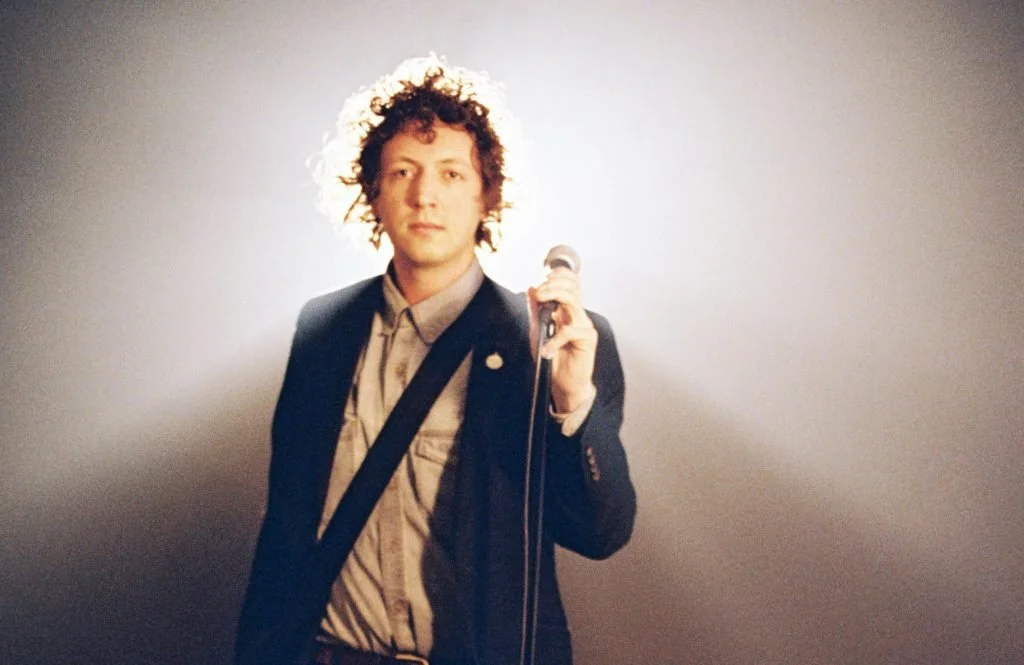
Now in his early 30s, the singer/songwriter and multi-instrumentalist has been making music since his teenage years in Chicago, cutting his teeth in jazz, indie rock, and hip-hop before emerging as an in-demand sideman for marquee names like Jeff Tweedy — Kazar grew up with the Wilco frontman’s son, drummer Spencer Tweedy — Waxahatchee, Kevin Morby, Sam Evian, and Hannah Cohen. While he continues to make a living primarily playing in other people's bands, Kazar has quietly released a pair of genre-fluid albums under his own name: 2021's Due North and 2025's Pilot Light.
Where the former saw Kazar mining for his artistic identity, Pilot Light solidifies it. Produced by Evian and recorded to tape at Flying Cloud, his studio in the Catskills, the album traverses breezy indie folk, twangy alt-country, and keys-driven retro pop — an unhurried sound that calls to mind Tusk-era Fleetwood Mac and other ’70s acts Kazar grew up studying.
Thematically, the quasi-breakup album sits with the quiet permanence of the ignition source it’s named for: the smoldering embers of grief and growth. The result is a collection of songs defined by sparse arrangements, warm production, and vulnerable storytelling.
Asheville Stages spoke with Kazar from San Francisco in the middle of a tour with Jeff Tweedy, which has him pulling double duty as both opening act and guitarist in the headlining band. The self-proclaimed “song absorber” spoke about how his tenure as a sideman has shaped his writing and inspired him to trust himself more in studio and on stage ahead of his Saturday, April 18 show at Motorco Music Hall in Durham with Cut Worms.
Jay Moye: You’ve got night two at The Fillmore tonight, and looks like you’re opening the show. How is that flowing — doing a short set every third show [he rotates with two other members of Tweedy’s band: his sister, Sima Cunningham, and Macie Stewart] before the headlining slot?
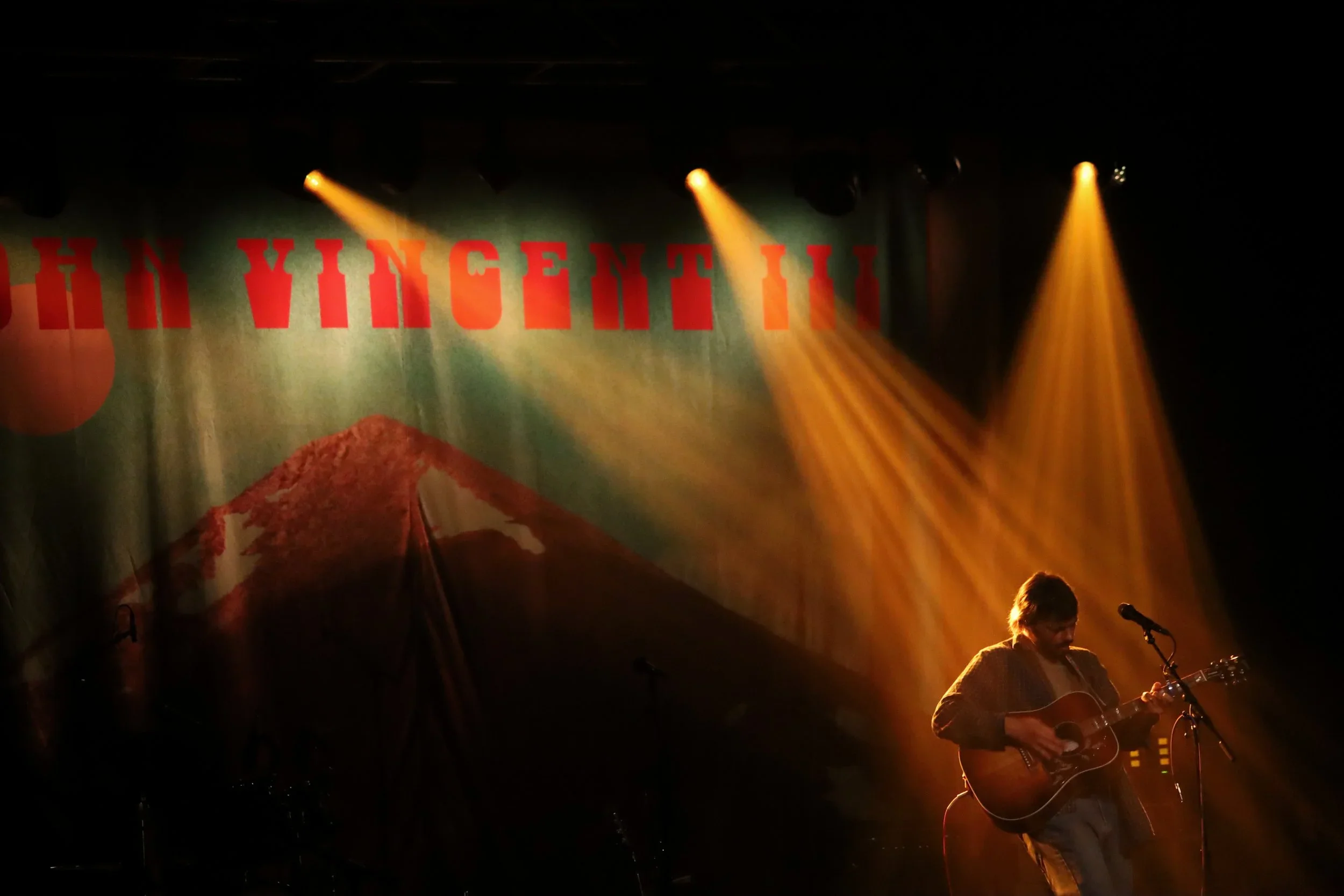
Liam Kazar: It’s definitely not normal, but with the opening sets being just solo, I can keep it kind of off the cuff and organic. Not that I don’t put care and attention into it, but I don't make a set list and just play whatever I feel like playing. So that feels different than the big show, which has guitar changes and choreographed segues between songs — all that sort of stuff. So, it's two different things.
JM: How will these solo sets be different from when you've got a backing band?
LK: When I've got a band with me, it’s broken into little chunks of songs that live together. I like to open it up. I play with musicians that are always down to try new things, so we go for it a little bit on exploring new corners of songs.
JM: Has that always been your approach, to keeping things pretty loose versus scripting out a set list and specific parts?
LK: I think it's a product of playing in so many bigger bands as a touring musician. When it became time for me to do it, I wanted to do it in a different way that feels more exciting and in the moment. I'm a big believer in being here to help this person have the show they want to have when I play in their band. But I was definitely yearning for a little bit of off-the-cuff spontaneity in my music.
JM: Were you confident in your songwriting voice on your first record, Due North?
LK: I think I was, but there was still fine tuning to do. Like, “Is this really me, or is this me wearing a costume of something I've listened to?” Now I feel like I really am acutely aware of what I want to say as a solo artist. It’s just the confidence to trust yourself, and not looking to other people to be like, “Is this what I should do?” At a certain point, some people never ask those questions and know what they want to do at a very young age. I questioned it for a long time, and I don't do that anymore. I feel like I know exactly what it is I want to write about and what I want to do.
JM: Do you attribute that to being exposed to so many different genres of music growing up and starting out? Is that why it took a minute to land where you have?
LK: Perhaps I got lost in possibility, having such a wide breadth of music I was exposed to. Then you get older and find the records you want to listen to that really mean a lot to you. There are amazing, incredible artists I have zero interest in, and that doesn't mean they're bad artists at all. It just means I'm figuring out who I am and what I like. Everyone should do that.
JM: Was it just a matter of time playing, writing, and touring that ultimately got you there? Or can you point to specific moments or milestones that were critical?
LK: The lion's share was just repetition and getting there by doing it. I don't know when it happened exactly, but I remember a feeling that came on, with a before and after, of recognizing that whatever song I write has to come through my voice. Recognizing that my voice is the main instrument in any song I write or recording I make, not treating it as this secondary thing you tack on to the end. Not getting into the weeds with guitar tones or crazy arrangements and then just throwing a whatever vocal on top of it with half-assed lyrics, which I tend to feel like I hear people do a lot. They put all this effort into a mix and all sorts of things, and then when it comes time to do the vocal, they just grab a cheap microphone and put a bunch of reverb on it. In my opinion, that's hiding the nucleus of the song. It's obscuring the painting. I just stopped doing that at some point and really decided to focus on my voice being the central element of every song.
JM: You recorded Pilot Light with Sam Evian at the studio [Flying Cloud] he runs with [his partner and fellow artist] Hannah Cohen in the Catskills with the same musicians who played on Sam’s record, Plunge. Did that lend itself to the speed and ease in which you were able to get this record done?
LK: Absolutely. I toured with all of those players before in Sam’s band. I had these songs, and Sam was like, “Let's just bring them all up for a few days and do it really quickly.” And he was right. The bulk of that record was two three-day sessions. These guys are all so good, and they all picked up on it immediately.
JM: Did you have an overall aesthetic you were going for when you started recording?
LK: I said I wanted to keep my vocals and guitars dry and natural sounding. But that was as much of an aesthetic conversation we've had. Beyond that, it was just Sam doing his thing. I trust Sam so much as a musical thinker and maker. He can walk over to my guitar amp and change my tone. I trust him because he's got the best ear.
JM: Does stripping it back like that liberate you or make you more vulnerable — or both?
LK: Definitely more vulnerable. I like the distillation.
JM: Your Pilot Light press materials describe its theme as “home.” How do you define home, given that you're on the road two-thirds of the year? What does home look like to you now, literally and metaphorically?
LK: At the time of making that record, I didn't have a real home. I was hopping around, touring 200 days a year. I was living with family, with Sam and Hannah, getting sublets in Europe or New York City between tours, just living out of a suitcase with one week’s worth of laundry at a time. I did that for three years, so home was very abstract. Now, I have an apartment in Brooklyn, so that is home. Although it’s been a busy couple of years, so you're catching me in a moment where home is still a little abstract.
JM: Looking at your tour calendar, you won’t be home for a while.
LK: Yeah, I don't really get much time at home until the fall.
JM: You've described the telepathic musical relationship between Jeff and Spencer Tweedy as something you can only approach through your closeness and history with the family. What does it take to find your footing in a tight-knit band like his?
LK: It really comes down to listening. We have my favorite stage volume and stage sound of any band I’ve ever played in. Jeff is really particular about the gear we're using and how loud we are. Spencer is super attentive to how loud he's playing. Everyone always remarks about how much he chokes up on his sticks. He just doesn't hit a note that's not purposeful, and he never hits it too hard for no reason. I've never been in a really loud or out-there band where I'm holding on for dear life. In my experience, the way to fit into any band is to want to listen and find your musicality by hearing what other people are doing. That's how I do it with the Tweedy band.
JM: Is that a similar approach with other projects you're part of?
LK: Yeah, but each had a different learning curve because I joined those bands as an adult — as opposed to Spencer, who I've been playing with since I was a kid. When you join a band, you do the best you can to get the music in you — the way it was recorded — and then at a certain point, you take it for yourself and find your own way with it. It's not a conscious thing; it just naturally happens. It took me a long time to accept that I was being hired to be myself and not to be a robot. People don't want robots in their bands. They want people in their bands.
JM: Why do you think so many artists want you in their band?
LK: Because I keep my shit clean and I show up on time. [laughs]
JM: What do you want fans to take away from a Liam Kazar set?
LK: It’s a big old world out there. It's nice to see some people still just hopping in a van and driving around the country to play music. That's what I'm doing with my life, and it feels more old-fashioned each day and like flying with beauty in the face of abject danger and insecurity. It’s certainly something we still feel is important. I think the show-going populace recognizes that live music is a respite.
IF YOU GO
Who: Cut Worms w/ Liam Kazar
When: Saturday, April 18, 8 p.m.
Where: Motorco Music Hall, 723 Rigsbee Ave., Durham, motorcomusic.com
Tickets: $26.77
(Photo by Alexa Viscius)