
Interview: John Medeski
Throw a piano key during the Big Ears Festival in Knoxville, March 26-29, and there’s a good chance John Medeski will see and/or hear it.
The renowned keyboardist is participating in numerous ensembles and other events throughout the long weekend and spoke with Asheville Stages about his plans and why he keeps coming back to the event.
Edwin Arnaudin: What's your history with Big Ears?
John Medeski: I guess my history with Big Ears is knowing [festival founder] Ashley Capps for many years — even pre-Bonnaroo [Music and Arts Festival, which he also co-founded] — and having him talking about this dream festival of his [laughs] a long time ago. And me thinking, “Oh, that's never gonna happen in Knoxville.” And then it's been happening! [laughs]
It's just beautiful to see this thing manifest and to blossom and grow the way it has — in the United States, especially. Most of the musicians that I know don't really consider the U.S. as a place that nourishes their music or their careers, so to have a festival like this in the U.S. has really been an incredible blessing. And, honestly, it's probably the best festival in the world right now.
Having done this for, whatever, 40 years all over the planet, and seeing the tides change everywhere — it used to be Europe was loaded with these really cool creative music festivals, and that’s still going on over there. But Big Ears is definitely one of the best on the planet. And it's incredible! I don't know how it's happened, but I've ended up playing there a lot over the past few years and doing a lot of different projects. And I'm always surprised. This year, all this stuff has turned up and it's great. I love it. It's an honor. Unfortunately, I ended up getting so many different things going on that I don't have as much time to go see other music. [laughs] But I still manage to squeeze it in.
EA: What have been some of your favorite moments from past Big Ears?
JM: There's so many. Getting to see John Paul Jones do his solo thing [in 2024] was pretty cool because I never saw Zeppelin or him or any of them in my lifetime. It never happened. And getting to see him do that was really beautiful.
I don't get out to see a lot of music in my life because I'm playing so much. I'll see things when I'm playing a festival sometimes. And try to listen to whatever everybody I respect says to check out. I'm just trying to keep up with my own mind and my own stuff that I wanna do. [laughs] And I get to play with a lot of people, so I'm constantly immersed in music. That's one reason I love Big Ears — I get to go out and see different stuff. But there's been so many, it's hard to even remember everything I've seen.
EA: That's a good sign — kind of an “embarrassment of riches” type of thing.
JM: I guess that is the one drawback of these kinds of festivals is that you wanna see 10 different things and some are happening at the same time.
EA: And speaking of, I think I counted that you're gonna be in five different groups or showcases.
JM: Yeah, I'm gonna be in five different shows and then a couple of panels and interviews and stuff. It reminds me of Jazz Fest in New Orleans in that way. But yeah, as a musician, to be really busy, doing a lot of different things and playing with a lot of different people, it's really great.
EA: Traditional festivals, you might have one set or you might be a guest with some other set for a song or two and mix around. But to have that many things planned, I'm just curious how that comes about. Do you just make yourself available and then it spreads like wildfire? What's involved in coordinating all these things for you?
JM: I have no idea how it happens. There's usually one gig that comes and I'm gonna do that one, and then all of us show up. And since these people are gonna be there, why don't we put them together? A lot of it comes out of logistics, because the reality is you need to somehow get to the place, right? So, that’s plane tickets and hotels and things. But if you're there, I'd rather be playing as much as possible. So, I'm psyched to be able to be there for the whole thing.
EA: I think I'm most intrigued by your quartet with [Billy] Martin, [Scott] Metzger, and [Nels] Cline. Was that originally a Big Ears creation or did that come about elsewhere?
JM: No, that came together in New York as an after-show band when Phish was playing Madison Square Garden. People want something to do after the show, so there are different gigs in the City. So, this was an idea.
Basically, we put the band together, did a set of shows, and it was successful. We did it a couple times. We did two nights a few different times in the City, twice at Sony Hall and once at (Le) Poisson Rouge. And so it became a band like that. And, of course, all of us have played together in all kinds of different situations before that, but never as that group. So, we did that group and it really clicked. It had a chemistry and it was easy and fun.
EA: How does this ensemble nurture your creative soul in ways that maybe other groups don't?
JM: I’m kind of set up in my life to do these kinds of things, which are very spontaneous and where we don't do cover songs and we don't write a lot of music ahead of time. It's very much improvised, and so in that way it's a free music situation. When I say “free music,” it’s not just soundscapes but free to do anything you want at any given time. And when you have a collection of these musicians, there's so many directions we can go. So, basically, you find your common ground in your common language, and then we explore it.
These guys are all great musicians — incredible side men and accompanists; incredible band leaders and incredible producers and creators of music of their own. So, you get those people together and we all respect each other, so it just makes for an incredible environment to create music to start playing and listen and think like a composer, like a producer, and try to create spontaneous compositions. And then, when you do it over and over, certain things, certain areas of music you gravitate to — certain styles, certain kinds of things.
This band has its own language, and at any given time, anybody can do anything to shift the direction. And everybody has such great ears — everybody's got big ears [laughs] — and anything can happen, and we're all ready to support whatever is introduced by any of us and then run with it and develop it and see where it goes. And then somebody can change that direction at any given time. It's kind of like you're on this journey and at any given point it's infinite roads in which it could go. And then we just listen and let the music lead us.
I guess that's how any improvised music really is. And it's good when everyone's being creative and strong, but also 100% supportive all at the same time. And not everybody's good at that. But that's everybody in this band. Everybody in this band is ready to take the lead, but also ready to accompany at every second.
EA: It seems like having all those kinds of experiences, especially so many within a short amount of time, that would be very fruitful for the next weeks, months — I don't know how long afterwards; like this kind of battery recharge. Do you feel especially inspired after you get home from performing at Big Ears?
JM: Yeah, I would say it’s inspiring the way that it makes us feel like it's still worth it to do it. [laughs] It gives a reason to do it, that people show up and the feedback is whatever it is — positive, negative, whatever it is. But it’s engaged listening. It gives one faith that it's worth doing it at all, especially in this world right now.
EA: Can you point to any specific past times when you got home after Big Ears and it brought out something extra meaningful or surprising to you?
JM: I guess it's just the overall — the fact that Big Ears exists and the fact that it's successful. It's complicated to be a creative musician and to figure out how to keep it going from a business standpoint, a survival standpoint, a life standpoint. And having Big Ears as an outlet or a showcase of this kind of music, that alone is enough.
And I think what's interesting is there's so many different artists and there are so many different ways to do it. And to just be surrounded by all these different people, digging in their own way — to witness all the possibilities. I guess you can take some of it in and apply it to your own life. I can't really think of how that specifically has manifested before, but I know that it does because you might see something, see how somebody's doing something and talk to whoever about what they're doing and how they're doing it. And then it just becomes a collective creation, and I think it's also inspiring to get this many people together who are doing their own thing and then celebrate it as one unit in a festival.
It creates community. It creates connection, and that's really what we need to keep it all going. There are obviously some artists who are really great at being alone and they thrive on the uniqueness and the aloneness. I just think, at the end of the day, we all need to feel like we're part of something bigger. And so to get the opportunity to be in a situation and to be in a festival like this, it's really a celebration of what we can do individually and together, and how by doing it together, we could create something even larger than what any of us could do on our own.
IF YOU GO
What: Big Ears Festival
When: Thursday, March 26-Sunday, March 29
Where: Downtown Knoxville, bigearsfestival.org
Tickets: Prices vary
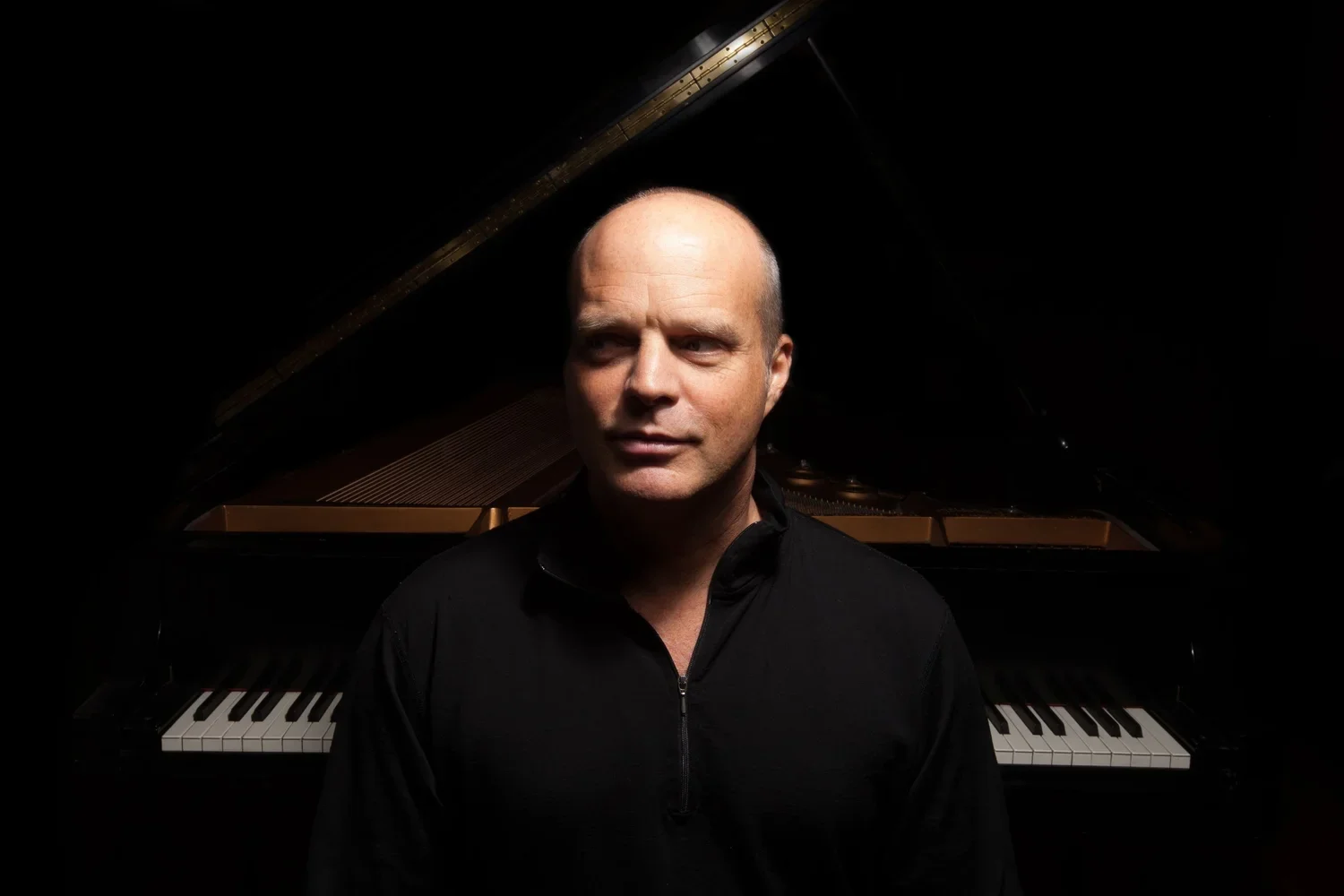
(Photo by Michael Bloom)