
Interview: Rhett Miller (Old 97's)
Rhett Miller suspects the Old 97’s — a founding father of the alt-country genre that coalesced in the late-’90s — would not have survived 33 years without his outlet as a solo artist.
“I don't know if we would’ve made it past 2001,” the band’s 56-year-old frontman and primary songwriter clarifies. “I started doing the flip-flop because I had so many songs I felt strongly about. I think of the Old 97’s as a machine that accommodates specific shapes, but not all shapes. I write songs that are shaped in such a way the band can't handle, so the fact that I get to use those on solo records keeps me from resenting my bandmates.”
Toggling between band and solo work has sustained one of Americana’s most durable names. Formed in Dallas in 1993, the Old 97's — Miller, guitarist Ken Bethea, bassist Murry Hammond, and drummer Philip Peeples — rode a major label bidding war out of a raucous SXSW showcase to Elektra Records, where albums like Too Far to Care and Fight Songs cemented the band’s twangy, hook-driven sound.
More than three decades in, neither the lineup nor the band's stated vision from the start — to craft a canon of music they can be proud of, hit records be damned — have changed.
That patience and persistence paid off in 2025 when the Americana Music Association presented the band with a lifetime achievement award. The humbling nod to longevity felt, as Miller says, a bit premature for a group that's still creating — the 14th Old 97's album is due out next year — versus just looking back.
In between tours, Miller stays busy juggling a jaw-dropping array of projects: releasing solo records; taking the occasional acting gig; publishing essays, short stories, and children's books;, teaching songwriting classes and workshops; and exploring the messy realities of the creative process through his Wheels Off podcast.
Ahead of his Saturday, Sept. 26, solo stop at Eulogy — proceeds from which benefit Asheville Music Professionals (AMP) — Asheville Stages caught up with Miller to talk through the Old 97’s’ arc and explore how he keeps so many creative plates spinning without dropping any of them.
Jay Moye: What does performing solo do for you that playing with your band doesn’t?
Rhett Miller: Performing with the Old 97’s, the same four guys for 33 years, is such a specific joy that, obviously, playing solo shows can never replicate. But when I've been out with the band for a while and I'm part of this machine that grinds through big chunks of the country a month at a time, it’s great to get the chance to play a show by myself and tell stories — which there's no room for on stage with the band.
I play whatever I want, which is almost all Old 97’s songs because that's what people primarily want to hear. I get to play a selection in an order the band can’t really make work. It’s the thing I've been doing now for 25 years, where I go off and do something by myself, then end up missing the band and really appreciating them more. And I’ll go off and do something with the band and end up feeling like, “Oh my God, get me back on a solo tour or in the studio to make a solo record because I can't take you know sublimating myself to the greater democratic ideal.”
JM: How is your songwriting voice for your solo records different from the Old '97s material?
RM: I just write songs, then find out whether or not they're Old 97’s songs.
There are times when I'm in the studio making a solo record and feeling what it’s supposed to be, then write a song specifically for it and know right away that it could never have been an Old 97’s song. One album I did called The Misfit was a late-[COVID-19-]pandemic record I co-wrote with my producer, Sam Cohen, in real time. We’d write a song in the morning and record in the afternoon. Since it was a collaboration with another artist, they were very much not Old 97’s songs. I do try to intentionally make the solo recordings sound and feel different, so fans don't get confused about why I’m doing them.
JM: You’ve said that you found your true songwriting voice during the Fight Songs [1999]/Satellite Rides [2001] era. What specifically about that timeframe helped you find your footing?
RM: Artists, and maybe songwriters more than other disciplines, have a tendency to people-please. In the early stages of my career, going back to when I was in high school, I was trying on different personas. When the 97’s started out, it was fun to be doing this thing that was rejecting the mainstream grunge aesthetic at the time and leaning into my seventh-generation Texan roots and Bob Wills/Willie Nelson/Johnny Cash fascination. To me, in retrospect, those early records sound so vaudevillian in their hickiness[JM1] . The country accent is so leaned into.
Somehow around Fight Songs — maybe it was the validation of being a couple of years into a major label recording contract — I just decided I could be me without hiding behind any pretense or trying to make anybody else happy. I felt like I’d found my voice as a writer, though it's always a work in progress. You're always trying to not be calculating or kowtowing to the fans or the press or whatever, which is easier said than done.
JM: You guys got a lifetime achievement award last year from the Americana Music Association. What was it like to be honored for a body of while still actively touring and recording, rather than being a retrospective thing?
RM: It did feel a bit like something an older artist should be receiving it — but hey, I’ll take it. I talked about the validation of the major label years: That was a real thing. And the Old 97’s are just weird enough that we haven't gotten a lot of the obvious forms of validation. We haven't won a lot of awards or had the success a lot of the other bands that came up with us have had, so it was really nice. For my 80-something-year-old mom to be there watching it happen — after putting up with so much baloney from me since I started doing this when I was 13 years old — was pretty sweet. And to have Roseanne Cash write and give a speech was so moving and meaningful.
JM: What about the early 97’s records give them such a long shelf life? Do you guys still enjoy playing the older tunes after all these years?
RM: I do. There's not a song in our catalog I couldn’t play in front of an audience and feel proud of. Some more so than others. The flip side to never having a hit is we've also never taken a swing and a miss on an album where we’d have to look back and be embarrassed. That was a really intentional thing from the earliest days of the dog-and-pony shows with the major labels trying to sign us. They’d ask, "What's your goal or plan?” And instead of saying we want to have a number-one record or to be Third Eye Blind — which, God, Elektra would’ve loved — we’d always say we want to have a catalog we can look back on and be proud of. It seemed a little [pretentious] in the moment, but it’s a mission statement we’ve really lived by.
JM: You've talked openly about quitting drinking over a decade ago and what that clarity has brought to your craft. Is there a bit of irony in singing the drinking anthems you’re known for from a sober perspective?
RM: Songs have always been time machines to me. I sing a song and I go to the garage apartment, second-floor kitchen window I was looking out of when I wrote it. A lot of them are really bittersweet time travels, but it's a really cool part of the job and it lets me be the person in the song, even though that person is someone I don't have a lot in common with anymore.
JM: In addition to performing and recording, you’re teaching songwriting and hosting workshops and retreats. What led you to that path?
RM: The Dallas press used to call me “ubiquitous teen folky Rhett Miller.” When I was coming up, the people I hung around and worked with were all older and more experienced than me. They were willing to mentor me as I figured it out, and that continued as I moved forward in my career. Our A&R guy at Elektra, Tom DeSavia, has been a great mentor. Waylon Jennings took our band under his wing in the mid-’90s, and we did some of his last recordings with him. He was so generous with his time and wisdom.
I got a lot out of being mentored and, over the years, have been asked by younger artists to step into that role myself. I see it as something — at the risk of sounding corny — that's really sacred and beautiful. I love it. And I’ve been able to make it more of a professional calling by conducting retreats and doing workshops at colleges.
When my daughter got accepted to Parsons School of Design in New York City and I saw what the tuition was going to be, I looked into getting a proper job teaching. I now teach one class a semester at The New School in Greenwich Village, which owns Parsons. Something I intended to do as a hack to get free tuition for my daughter wound up being something I can't imagine ever stepping away from, even after she graduates.
It's just such a vulnerable time. The world needs more people who are willing to do this weird thing that’s not well compensated and seems glamorous but, in reality, is so difficult. If I can, just in a small way, help usher a few kids into this profession, this calling, and give the world the gift of more songs that aren't cynical or calculated, then let's go! I'm all for it.
JM: How does teaching inform your creativity? Are you getting things out of the experience that you bring back to your art?
RM: It's really good for me in that it constantly encourages me to put my money where my mouth is. It keeps me honest. If I'm out there talking about how you have to write songs to get better or to keep being able to call yourself a songwriter, then I have to write songs. If I'm not writing songs, how can I ask other people to write songs?
JM: With everything you have going on, how do you structure a life with so many creative outlets without one cannibalizing the other?
RM: That's a great question I have to ask myself all the time. The reality is I have to do the thing that brings in money, like what I'm doing right now — driving [from his home in the Hudson Valley] to LaGuardia [Airport] to fly to Galveston [Texas] to play for people in the real world. It’s also the thing that's irreplaceable by AI and, in a lot of ways, the most valuable because people coming together in a communal way to sing in a room is just fucking magic. It’s the only real antidote to so much of the depersonalization and media-driven, tech-driven reality of our lives.
I love doing it, but it’s hard. Driving to the airport to catch a flight, schlepping gear, getting a rental car, checking into a hotel… As Roseanne Cash told me once, it's not the two hours on stage they pay you for; it's the 22 other hours you spend getting there and figuring it all out. I’d love to be able to balance it out more with the other things I really love doing — the writing and the teaching, which pay less but are more gratifying and less difficult. It’s a mixology I didn't anticipate for my latter career, but I still have to support my two young-adult kids and would love to have a savings as I move into old age. I'm getting closer to figuring it out, year after year, knock on wood.
IF YOU GO
Who: Rhett Miller with Jeff Santiago and Claire Whall
When: Saturday, Sept. 26, 8 p.m.
Where: Eulogy, 10 Buxton Ave., burialbeer.com/pages/eulogy
Tickets: $14.33
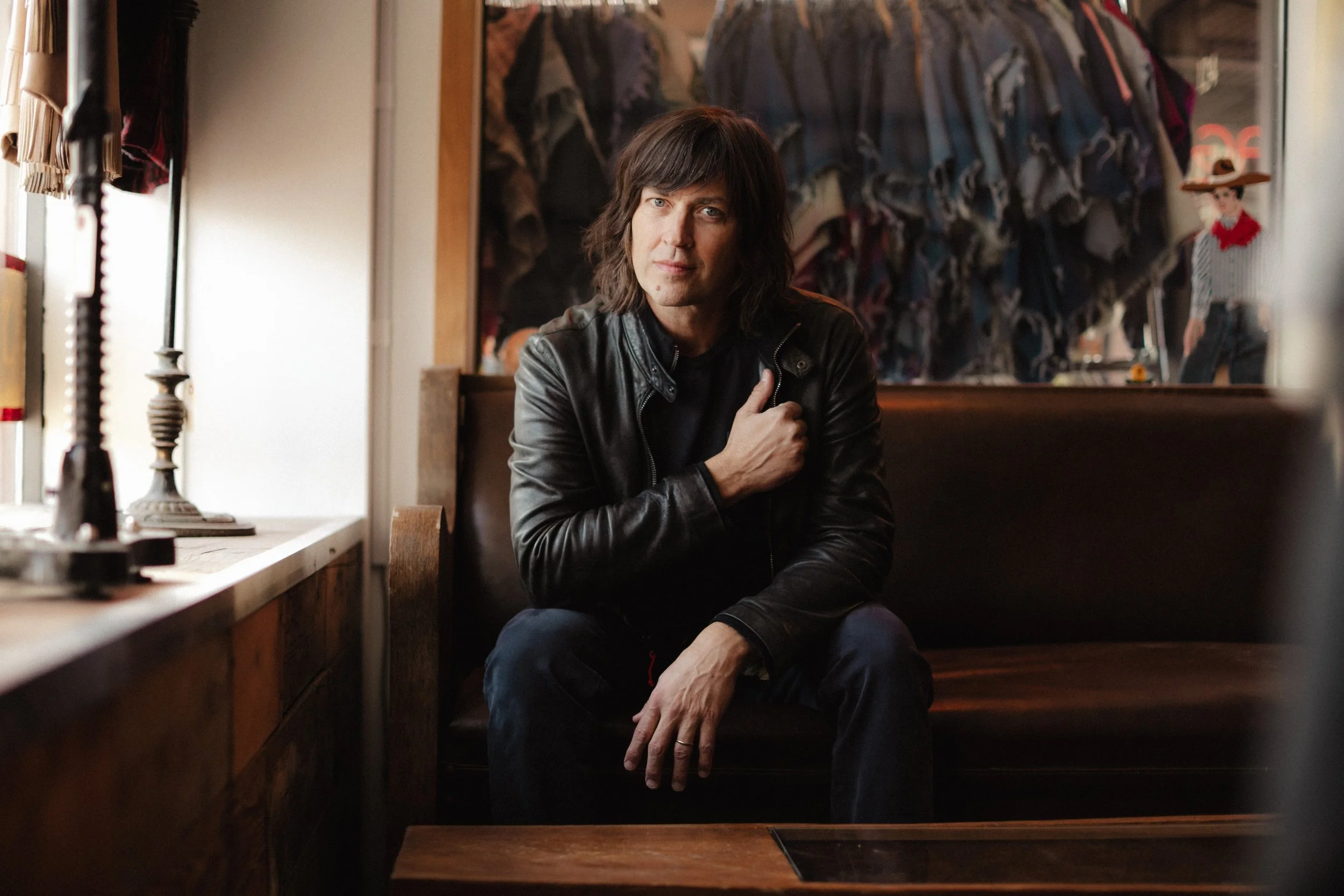
(Photo by Jason Quigley)