
Interview: McKinney
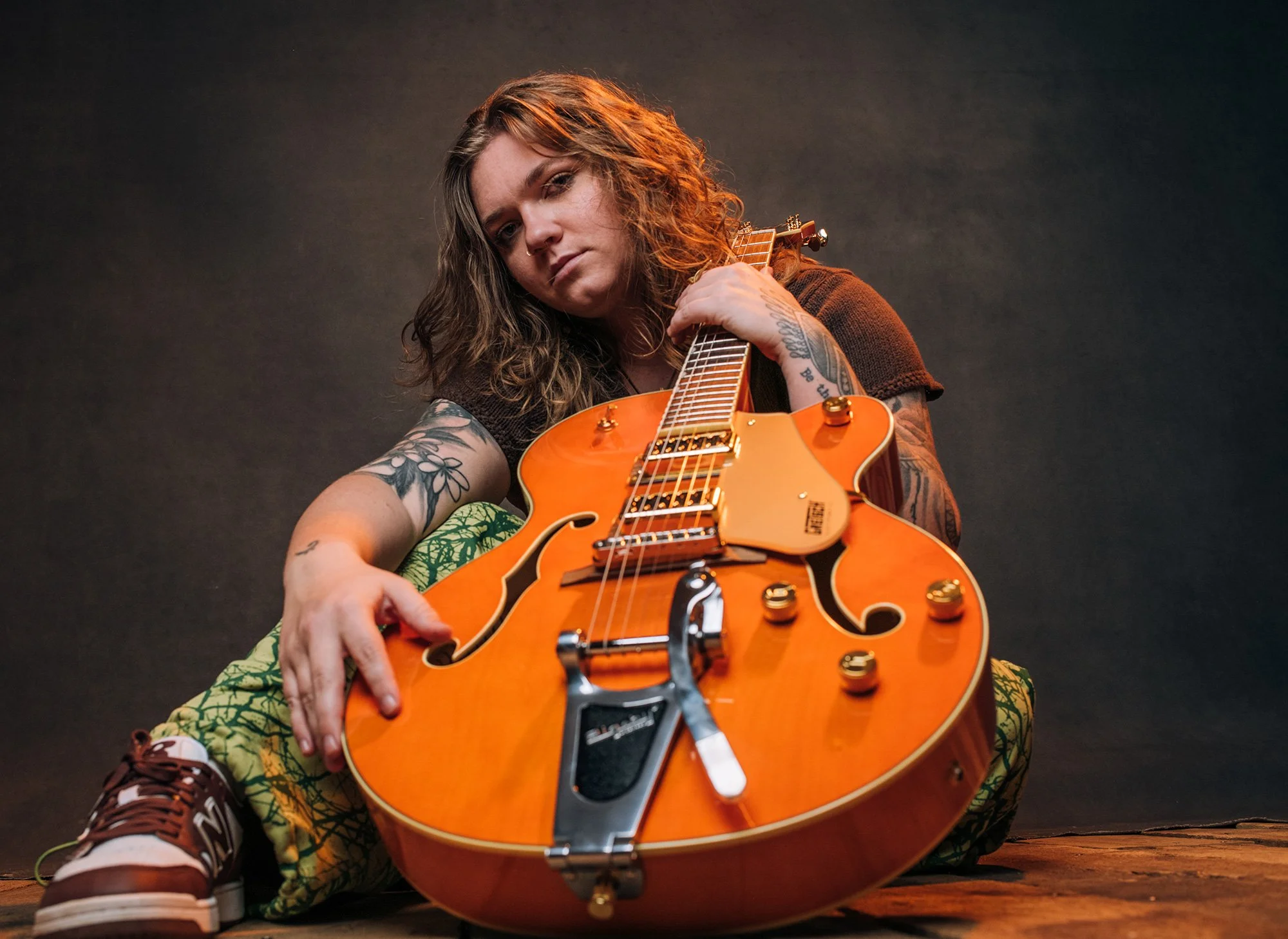
Some musicians grow up so immersed in music that their rich heritage reveals itself within the first minute of hearing them play. That’s certainly the case with McKinney, the remarkably talented daughter of local musical powerhouse Melissa McKinney.
Raised in a deeply musical family, McKinney has been making music since childhood and has performed in several bands. On Monday, Feb. 9, however, she takes a defining step forward with the release of her debut solo album, Bones.
Debut albums are often raw and unpolished, but Bones sounds like the work of a seasoned professional — someone who understands how to balance ambition with restraint. While the record draws from a wide spectrum of genres, it feels most rooted in the bluesy soul she grew up with and her background as a jazz bassist. On tracks like “Casually” and “Runaway,” the influence of Esperanza Spalding is unmistakable, though McKinney possesses the chops and confidence to make that influence her own.
As impressive as her musicianship and thoughtful arrangements are, it’s McKinney’s emotional candor that elevates Bones to another level. Nowhere is this more apparent than on “Riverside Drive,” written in the aftermath of the devastation caused locally by Tropical Storm Helene. Songs inspired by tragedy often veer toward the saccharine and forgettable, but McKinney approaches the subject with rare depth and clarity, creating something that packs an emotional gutpunch. It’s an inspired encapsulation of the experience and the scars it left behind.
With Bones’ imminent arrival and McKinney set to open for Amelia Day at The Grey Eagle on Wednesday, Feb. 11, Asheville Stages recently spoke with the artist about her debut.
Jonny Leather: Can you talk about the music school you lived in while you were in West Virginia?
McKinney: Stages Music School is a business my mom started when I was in elementary school after moving us back to her hometown in Princeton, WV.
We lived in the business. In a lot of ways it was amazing. I’m sure you can imagine I didn’t get a ton of privacy, but I was homeschooled for most of middle and high school, so that connection to my peers was extremely important to me.
Stages acted as the foundation for my musical career. I joined my first band, Missbehavin’, there. I started teaching lessons there at a very young age. We formed the One Voice project — an artist development program for youth artists that organized fundraising concerts and antibullying tours in schools all over the East Coast. I had access to a great music education and got to be involved in learning the business side as well.
JL: How long have you been in Asheville now, and what was it like finding your footing in the local music scene when you first arrived?
M: I moved here in 2018 to attend UNC Asheville. I dropped out during [the] COVID-19 [pandemic] but I decided to go back after [Helene] and I’ll finally be graduating with my BFA in Jazz and Contemporary Music this May. It’s been an absolute pleasure to be back taking bass lessons with Zack Page. He’s made me a better player, but has also always been down to chat business with me and guide me through the gig economy.
I felt very welcomed here as a young artist. I just started showing up to jams. Everyone was kind and quick to throw me in the mix. I wish I could start naming all the musicians that took me in, but we’d be here forever.
I think what sets our music scene apart from others is the amount of amazing venues we have here that care about building and supporting local bands. Even our larger cap rooms that bring in national touring acts — like The Orange Peel, The Grey Eagle, and Eulogy — love the locals. I’m always seeing local showcases and local support acts. I think it’s awesome.
The Salvage Station was a venue early on in my time here I felt really taken care of by. I always felt like they were giving me better deals and just an overall hospitality experience I didn’t deserve. I’m extremely excited to see what’s next for them with the new venue [on Lyman Street].
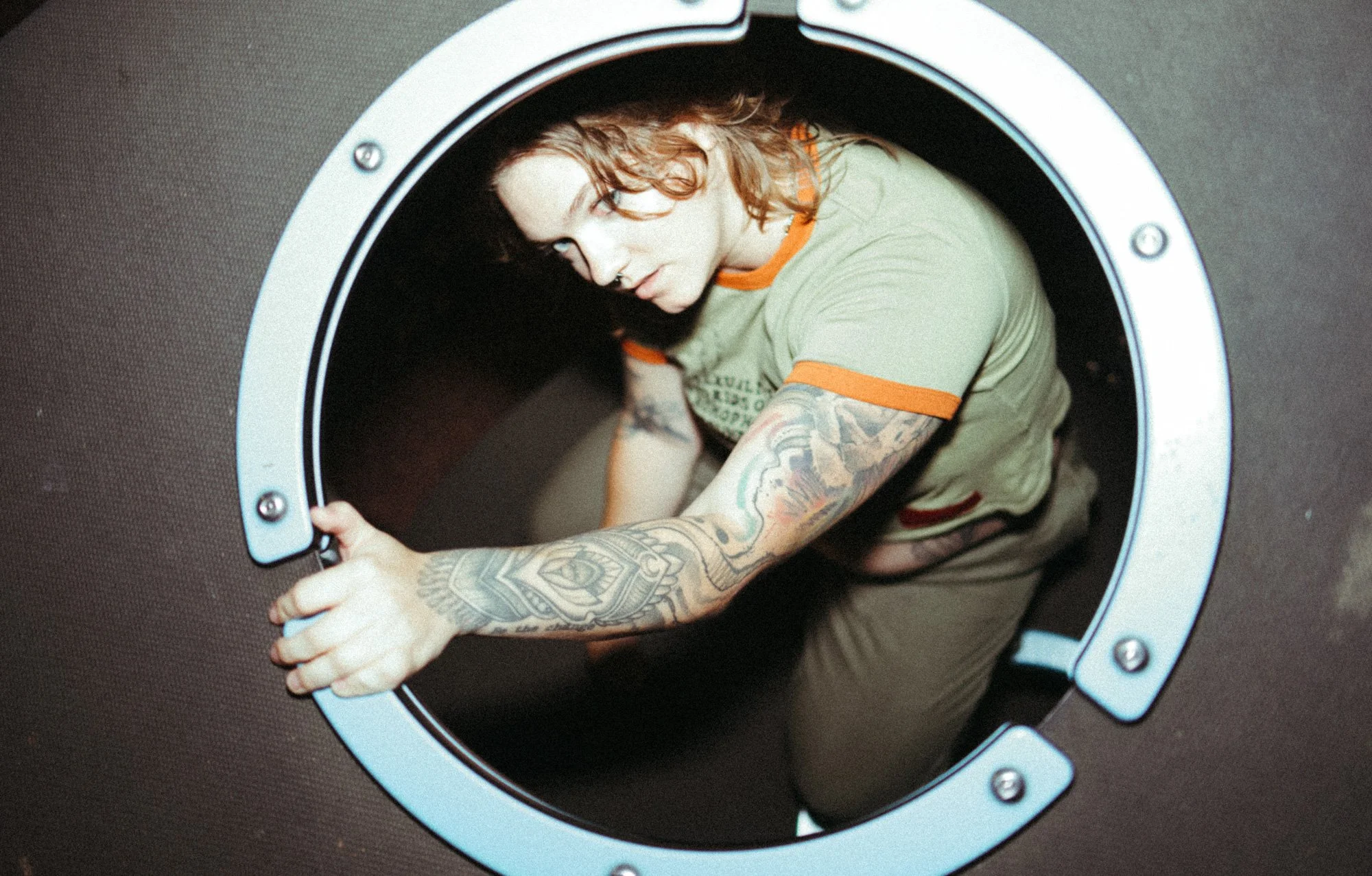
Photo by Julianna Jade
JL: You also teach music at LEAF Global Arts. How has teaching shaped the way you think about your own music or creative process?
M: You don’t make it as a teacher without a ton of patience. I’m still learning how to apply the same patience to myself and my own music, but reshaping music as something that is supposed to be fun and not stressful has helped me let go of criticism towards the art I create.
I’ve also learned how to be flexible because everyone I teach needs something different. I tend to get stuck in patterns or rules in my writing, but there’s no “right” process when I’m teaching. It’s just whatever works that day.
Songwriting is my favorite class I get to teach at LEAF. Kids just have the most original thoughts. You literally wouldn’t believe the hits these kids make.
JL: On Bones, the songs feel largely unconstrained by genre. Were you ever concerned with maintaining a cohesive sound, or did you trust that something would naturally tie the record together?
M: Absolutely, I was worried about how this would all tie together. I considered releasing only singles or releasing a couple EPs.
I ended up going the album route partly because the lyrical content is all so connected that it felt weird to separate songs like “Guilty” and “Broken Record.” They are so wildly opposite in genre, but they are telling the same story.
It’s also a milestone I wanted to reach. I wanted to say I have an album. I did have to decide I just didn’t care about anything I’d ever read online about marketing, though, which was a little terrifying.
JL: Debut albums often feel like the culmination of a lifetime of writing and listening. How long have these songs been living with you, and how have some of them evolved as you’ve grown as a songwriter and musician?
M: “I’m Tired” is the oldest song on the record. The original version was the first song I ever wrote when I was eight. I was writing something that I thought was new right in the peak of COVID, but it felt so familiar, and then I realized that was because I already wrote it 12 years ago. Eight-year-old me was writing about feeling isolated, having trouble making friends, and the impact it had on my mental health.
The first half of the new version came during COVID, where I was feeling extremely similar to that eight-year-old version of me, isolating up in my hometown.
I finally finished it in 2023 after finding out I was misdiagnosed as bipolar and started coming off some pretty intense medication I didn’t need that made me insanely paranoid.
JL: “Riverside Drive” is especially emotionally powerful. Given how raw Helene still feels, is it difficult to perform live? How have audiences responded to it?
M: It can be hard to sing, but it is hard to watch how people are affected by it. I normally try not to look out at the crowd during this one because if I see someone else crying, I’ll cry.
It’s been devastating to learn how many people outside of Asheville can relate to our experience. It’s the song most people want to talk to me about after a show, whether they want to check in on Asheville or share their story of a similar event.
JL: Is there a song that has truly shaken you to your core?
M: This is the hardest question. I have no idea how to pick one. Artists that I’m loving everything by right now are Ruby Waters, Monica Martin, and Joy Oladokun.
Some songs I’ve had on repeat lately: “Sink” by A.G. Sully; “Shape I’m In” by Palmyra; “Sayin Goodbye” by Julian Forest; “Advice from Ray” by Zinadelphia; and “Secrecy” by Ethan Regan.
JL: “Get Out of My Head” is a song on Bones that really stands out to me. Can you tell me a bit about how that song came together?
M: My mom wrote this song. I have great memories of her singing this one growing up. We joke a lot that she sang a ton of man-hating songs when I was young and that’s why I’m gay.
She was working on some originals a few years ago and recorded this one at Echo Mountain [Recording], but then decided she didn’t want to release “Get Out of My Head.” So, naturally, I said, “Please pass me that!”
I took the tracks to Ted Marks, who brought in more of the pop production elements, and I wrote a few more verses to make it fit my style.
JL: Outside of this project, are you currently playing in any other bands or musical collaborations?
M: I play bass for hire, so I get the opportunity to play in many amazing projects across a variety of genres. In 2025, I most regularly played with LEAF KONO Band, Andrew Scotchie, Lowen, and MAMA (Melissa McKinney).
IF YOU GO
Who: Amelia Day w/ McKinney
When: Wednesday, Feb. 11, 8 p.m.
Where: Grey Eagle Music Hall, 10 Buxton Ave., thegreyeagle.com
Tickets: $20.91
(Photo by Sandlin Gaither)