
Interview: Kathleen Edwards
Kathleen Edwards is unpacking the last 18 months or so of her life, both literally and figuratively, when I catch her via phone at her home in St. Petersburg, Fla. In addition to relocating contents of suitcases and cases of instruments and gear, she’s sifting through memories and insights from the road to be processed quietly.
“The very thankless parts of touring: the after,” she explains.
Edwards returned days earlier from a lengthy and soul-filling tour that, in its final weeks, included her debut performances at the Newport Folk Festival and San Francisco’s Hardly Strictly Bluegrass; an appearance at a star-studded tribute in Chicago to one of her heroes, the late John Prine; a turn on the Ryman Auditorium stage in Nashville during the Americana Music Awards; and her first headlining show at the Carnegie Hall of her Canadian homeland.
The recent run stirred up a lot for the 48-year-old singer/songwriter, who stepped away from the spotlight in 2014 following a string of acclaimed albums before returning to music during the COVID-19 pandemic.
“It’s been a whirlwind,” she says. “I’ve been caught off guard by the ghosts of my early career. It’s this strange, mixed feeling of realizing that a lot of doors opened to me in a very short period of time when my first two records [2003’s Failer and 2005’s Back to Me] came out.”
She was in her early 20s: too eager to please, too exhausted and overwhelmed, and too concerned with proving herself to truly take it all in. Now, she says, she’s more equipped to appreciate the ride and be proud of the impact her growing catalog continues to make with long-time and new fans alike.
After the release of her fourth album, Voyageur, Edwards exited the music business and opened the cheekily named Quitters Coffee in the small town of Stittsville, Ontario. She figured that was her path, until Maren Morris and producer Ian Fitchuk invited her to come write with them in Nashville. The session reminded her that people still counted her as an influence, eventually inspiring her 2020 comeback Total Freedom and 2025’s Jason Isbell-produced Billionaire.
Asheville Stages caught up with Edwards ahead of a rare solo acoustic show on Thursday, Oct. 22, at the Highlander Mountain House & The Ruffed Grouse Tavern in Highlands, N.C.
Jay Moye: Is it a bit of a comedown to return home after such a long run?
Kathleen Edwards: It’s been a wonderful year and a half. I was just looking at a photo from this past February when we were playing in Santa Fe, and we were in the throes of full tour mode. It seems like both yesterday and five years ago. So much has happened. Like, holy fuck! I did a lot this year.
JM: You’ve done a lot in just these last few months.
KE: To be part of the John Prine event in Chicago this past week, I’m reminded of having the opportunity to open for him in 2005 and how fortunate I feel. There were so many people at the tribute who didn’t know John and never played with him. He’s a hero, but he’s gone, and I have this incredible experience where one of my heroes had me open for him. And with Americana[Fest], I was standing on stage with Buddy Miller, who was there the first time I played it in 2003.
I just feel very happy to still be doing it and much better equipped to enjoy it and appreciate these moments. Because when you’re 23, 24, 25, you’re excited to be there, but you don’t have the history of experience behind you to appreciate that you’re in the room with a lot of great people. But also that you’re there because your work is good, and to take some satisfaction in being included and not shy away from the moment — but also feel incredibly grateful because tons of people put out records every year and don’t get to do all the stuff I got to do. I’m torn between young me and me today, and I still feel 30. I’m also so much more aware of how fleeting it is, and how lucky I am to be playing music and to be invited.
JM: What would you say to the Kathleen of 2003 if you could talk to her now? What advice would you give her?
KE: At the time, young me just wanted to be one of the boys. I didn’t want to ever be thought of as high maintenance, so I’d be self-deprecating all the time in the context of my achievements or the people who included me in things. I went in feeling like I probably was out of my depth and didn’t fit in, when, really, I deserved to be there. I did make a tremendous amount of improvement over the years, but the reason I was there in the first place is because I was good enough.
Now I just think, “Why didn’t I have somebody help me with my clothes and hair when I was 26 and I had to be at this big event, and I just look like a slob?” I know those are silly, weird, maybe kind of — what’s the word I’m looking for? — materialistic types of reflections, but it was also a reflection of me not thinking I deserved to take the time, pride, and onus on myself to stand out and enjoy it. Now I just feel so much more equipped, and I’m much more of an unapologetic human than I used to be.
JM: How has that shifted perspective influenced your writing?
KE: I think it really showed up on Billionaire, to the point where I definitely had a bit of a chip on my shoulder.
I was coming off a very difficult shift in my adult life, so a lot of those experiences came through in my songs. Part of that was running a small business through COVID lockdowns in Canada, owning the trajectory of where I wanted to go, and realizing you come to a certain place in your professional life and have to make some changes with people who are invested in helping you get where you want to go.
I was the most unencumbered — like what you just asked me — by whatever songs I was going to write. I was going to be playing them and not thinking I couldn’t say something, which is one of the nice things about getting older. You’re a little more prepared to be more brutally honest.
Speaking of my younger self, people still reminisce about Failer as a certain nostalgic timestamp. That really bothered me when I was working on my third or fourth record, because how am I supposed to be able to grow if everyone’s stuck on this first impression of me? I had to appreciate that people don’t necessarily have to care about all your records. If they care about one, that’s a fucking victory. It’s not a reflection of whether or not your work today is good versus five years ago. I just want to write songs and feel like they’re the best songs I could write in that period of my life.
JM: What’s your current relationship to the songs from Failer and your other earlier records?
KE: For the last four or five years since I’ve been back playing full time, there are certain songs from those records I play every night. I play “Back to Me” and “In State” all the time. I play “Six O’Clock News” and “Hockey Skates.” I love “Mercury.” And when you play a song you wrote 25 years ago, when you literally fucking didn’t even know how to use an iron or an ironing board, and people are singing along, it really is a validating and wonderful feeling. Like, wow, people really fucking have my back! People got me then, and they get me now. There’s not really a word that can properly articulate how that feels, but it’s incredibly rewarding.
JM: Did being away from music contribute to that appreciation for the validation of having your earlier work mean so much to so many people?
KE: Massively. Because in those years, when I was playing a show, people weren’t talking to me or building a relationship with me because I was this musician on a pedestal. At my coffee shop, I had a staff to run, coffee to brew, paperwork to handle. If someone came into the shop, either from far away or from down the street, and took the time to say something about what my music meant to them, it meant something so different because it was a chapter I thought was going to be closed.
I realized how special it was that something I made meant something to them in the same way the coffee shop did. I built a place people loved coming to, which helped me better appreciate it as opposed to the burden I think I felt previously. I was always so weighed down by my own vulnerability. I had a really hard time not feeling like someone was putting their story on me, when really they just wanted to tell me my song meant something to them.
In that chapter, people would write me letters and send them to my coffee shop P.O. box, and I’d go and pick them up. I just read this novel I loved, The Correspondent [by Virginia Evans], which tells stories through written correspondence of characters. It reminded me how meaningful every heartfelt letter I got and read meant to me. It left me emotional that someone would take the time to send me a heartfelt expression about how they loved something I did. I feel so lucky that I’ve turned this into some kind of career.
When I was 16, busking on the streets of Ottawa, of course that’s what I wanted. But I didn’t actually think I’d ever do it. It’s the fantasy, and sort of the way a pile of Jenga bricks gets built up in ways you don’t realize is happening, day by day, piece by piece, song by song. Suddenly you go, “I have all these experiences and fans and bodies of work that have endured, and they still mean a lot.” And that’s a nice life.
JM: When you stepped away, was it an intentional hiatus or pause, or did you really think you’d never come back to music?
KE: I really didn’t think I was going to keep doing [music]. It was a long time coming. I had gotten divorced in early 2010. By the end of that year, I was the girlfriend of Justin Vernon [Bon Iver]. He was producing my next record, and his world was already huge and continuing to explode. I was in his shadow, sort of tagging along. When I was making Voyageur, I started to really experience symptoms of depression, but I didn’t know that’s what it was. I was just emotionally exhausted, and trying to rise to the occasion of having gotten through being married to somebody and then breaking up by the time you’re 32 is huge. I really think I underestimated how much that was going to affect me.
By the time Voyageur came out in 2012, I was really not well but had not figured out what was wrong with me. I had a lot of physical symptoms. I was overwhelmed. At the same time, I had this record that in theory was the most successful record I ever made.
And I wouldn’t do anything differently, because quitting music and opening up my coffee shop opened up my life to so many new parts of adulthood that I needed to experience. I really didn’t think I was going to do [music] any more, when, really, I just needed a fucking break.
JM: And then you came back better than ever. Can you walk me through how you gradually returned to music?
KE: It started with just a little spark. I got asked to do a co-write with Maren Morris, who was really lovely. Co-writing really was not something I was into doing. It ended up just being a day of hanging out in Nashville with Maren and [producer] Ian Fitchuk, who told me, “Everyone I know refers to you as a huge influence.” He reminded me that all this stuff I did has endured. He left the door open to work together, and the feeling of wanting to write songs again just snowballed. That became my [2020] record, Total Freedom.
Incredibly, when I picked up the phone to touch base with a few people, they called me back with genuine and helpful enthusiasm. That made it easy to want to put out another record. All of that happened on the heels of another big life change, because I realized I probably couldn’t own and run a coffee shop full time while having a career in music.
JM: It sounds like an either/or.
KE: Yes. Those were the years in which Billionaire started coming into existence. I was really fighting to be back as someone who wanted to be in the conversation of people writing songs, putting out records, and getting to tour. I didn’t have a manager, so I had to fight for all these pieces of the chessboard you need if you’re going to have a chance. I wanted to try and see if I could keep going from the foundation I had built.
In a really disheartened couple of weeks, I had just done some cover songs and gone to LA to work with Jim Scott, who I’d had worked with previously and to this day is one of my heroes. Somebody had pitched me the idea, saying, “I’ll talk to your label and get them to fork out some money to help pay for this.” We had a plan, but it turns out that person never talked to the label. I’d spent all the money to make this record out of my own pocket and was incredibly disheartened. I thought I’d never find a good manager. I had some experience in the years before to know the difference between someone who knows what they’re doing and someone who doesn’t. I didn’t want to just start from the beginning with somebody and tell them what their job is.
And in this very exasperated, very broke, “What the fuck am I going to do?” moment, Jason Isbell had received my cover of his song, “Traveling Alone”. He reached out to me saying he really loved my version and asked what I was up to. And I was like, “Well, I’m actually looking for somebody to help me produce my next record.” A week later, he said, “Maybe I should do it,” and that suddenly opened the conversation into a whole other series of opportunities.
He enlisted Gena Johnson, who he’d made his last couple of albums with. Working with her was kind of like, “Oh my God, here’s a woman who is in my age bracket, who’s incredibly capable and intelligent, and who is invested in making this record with me, with Jason.” And that made me realize I have what it takes to be out there making records.
I’m really proud of [Billionaire]. Jason’s playing is always impeccable, but he played beautifully on my record. And Gena, as the engineer, really makes the record and had a huge role in putting a stamp on these songs. I’ve since fought my way back into doing tours and building an audience and trying to figure out how to tell people I’m here and hoping they will listen to my music again.
JM: Jason and Gena are known for working really quickly. What did they pull out of you that you wouldn’t have been able to find on your own?
KE: They are, which was hard for me. There was no pre-production or really any conversations in between our recording sessions, so I was on the spot. I did learn a tremendous amount from that, even though I was uncomfortable a lot of times. When you have great players, you don’t need to overthink.
I think that comes from what we were talking about before, which was the kid who thinks she doesn’t deserve to be in the room and really has to prove she does by agonizing over it, making sure it’s just right, and thinking, “This has to be my best record, because if it isn’t, then I won’t be taken seriously.” All those voices of self-doubt. Thankfully, I worked with two people who were very confident and have had success, and that’s contagious. I’m really grateful.
JM: You’ve been on the road with a full band and are now transitioning into a more stripped-down approach to performing. You’ll be solo here in Western North Carolina next week?
KE: Just me and a guitar, which is a rare thing. I opened [solo] for Josh Ritter the other day at the last minute and have been playing a bunch here at home by myself, so I can be on stage and be sure I’m feeling good about it.
JM: You’ve got some dates coming up next month opening for The Jayhawks. Will those also be solo?
KE: That will be a duo thing with Matt Susich, a songwriter from Brooklyn who’s been touring with me for a couple of years. He plays bass in my band, but he’s kind of the David Rawlings to my Gillian Welch. He sings and plays, and is one of my best friends. I really love our duo show a lot.
JM: I imagine playing in such different formats scratches different itches for you, creatively?
KE: They do. And in full transparency, playing solo is a little bit terrifying for me. Like I said, I’ve just been playing at home to get my sea legs back to what it’s like to just be me and not have to stick to the structure you have to when you play with your band. And there’s freedom in that.
JM: How did [Waxahatchee frontwoman] Katie Crutchfield’s faithful cover of “Six O’Clock News” [the lead single from Failer] come to be, and do you recall your reaction when you first heard it? What does it feel like to have a younger artist from the same genre paying homage to you in this way?
KE: I’m just so flattered. It sounds really selfish and narcissistic, but when you do this, you kind of have to throw everything at it. When you go on tour, you have to pace yourself and be sometimes a bit ruthless about making sure you have what you need to do this. Sometimes sacrifices come with that, and sometimes you can’t prioritize social connections because you’re saving your energy to sing and living in your own bubble. So to have another musician who — and I haven’t actually thought about the math on this, but she was probably in middle school when that song came out, is a good reminder that you never know who’s listening. You never know what kind of impact something you did in a moment will have in a broader picture.
I’m sure a lot of people who listen to [Waxahatchee’s cover] aren’t looking up who wrote it. They think she did, and that’s wonderful, because it means my song lives in another generation. You just don’t think that’s possible when you’re fighting it out for yourself trying to figure out if you’re going to get a booking next week, or if anyone will ask you to play Hardly Strictly. These are the true gifts and rewards you can’t predict or see coming. I’m so incredibly thankful to her and to [singer/songwriter] Brennan [Wedl], who recorded it with her. I’m really, really flattered.
JM: It’s a refreshing trend I’ve noticed lately: younger generations of artists paying it forward by amplifying their predecessors. Even this week, the Felice Brothers were honored with a tribute album [Felice County Fair (A Celebration of The Felice Brothers)] featuring artists — many of them much younger — covering their songs.
KE: So true. Our heroes had a very different experience. Everyone has their own ups and downs, everyone has their own unique struggles, but Joni [Mitchell], Neil [Young], Bruce [Springsteen] — all of these foundational, extraordinary heroes in our lives still, as well as those who have have passed on — a lot of them had financial stability pretty early on in their careers, because they came out and people fucking loved them. There weren’t 30,000 other songwriters vying for the algorithm. It was a different thing. The Felice Brothers are a great example of artists who, in a different era, might have been far more known and maybe mainstream, because they’re so good. And maybe I’m one of those people. We’re writing songs that are similar to music that would’ve been big in the ’60s and ’70s.
It’s heartening to see us acknowledge artists who’ve been around a long time and whose work deserves a moment. Richard Buckner was a huge influence on me, and I’m trying to figure out a way in the next couple of years to do a project that acknowledges and celebrates him so people don’t forget that he was a unique, ahead-of-his-time Americana songwriter.
JM: Thanks for being so generous with your time, Kathleen. The show in Highlands should be really special. Enjoy Florida for a few more days before coming up here where the leaves are changing and the air is crisp.
KE: I can’t wait. I’m probably not going to want to leave. I moved from Canada to Florida about four years ago, and people look at me sideways when I tell them that. I’m from Ottawa, and if you’ve spent any winters there, let alone a lifetime of them, you’ll know that I’ve earned my place in Florida. But I miss the woods. I’m used to hiking in the mountains and forest. The woods are my favorite sanctuary, so I’m looking forward to being in North Carolina.
IF YOU GO
Who: Kathleen Edwards
When: Thursday, Oct. 22, 8:30 p.m.
Where: The Ruffed Grouse Tavern at Highlander Mountain House, 270 Main Street (Highlands, N.C.), highlandermountainhouse.com
Tickets: $41.84
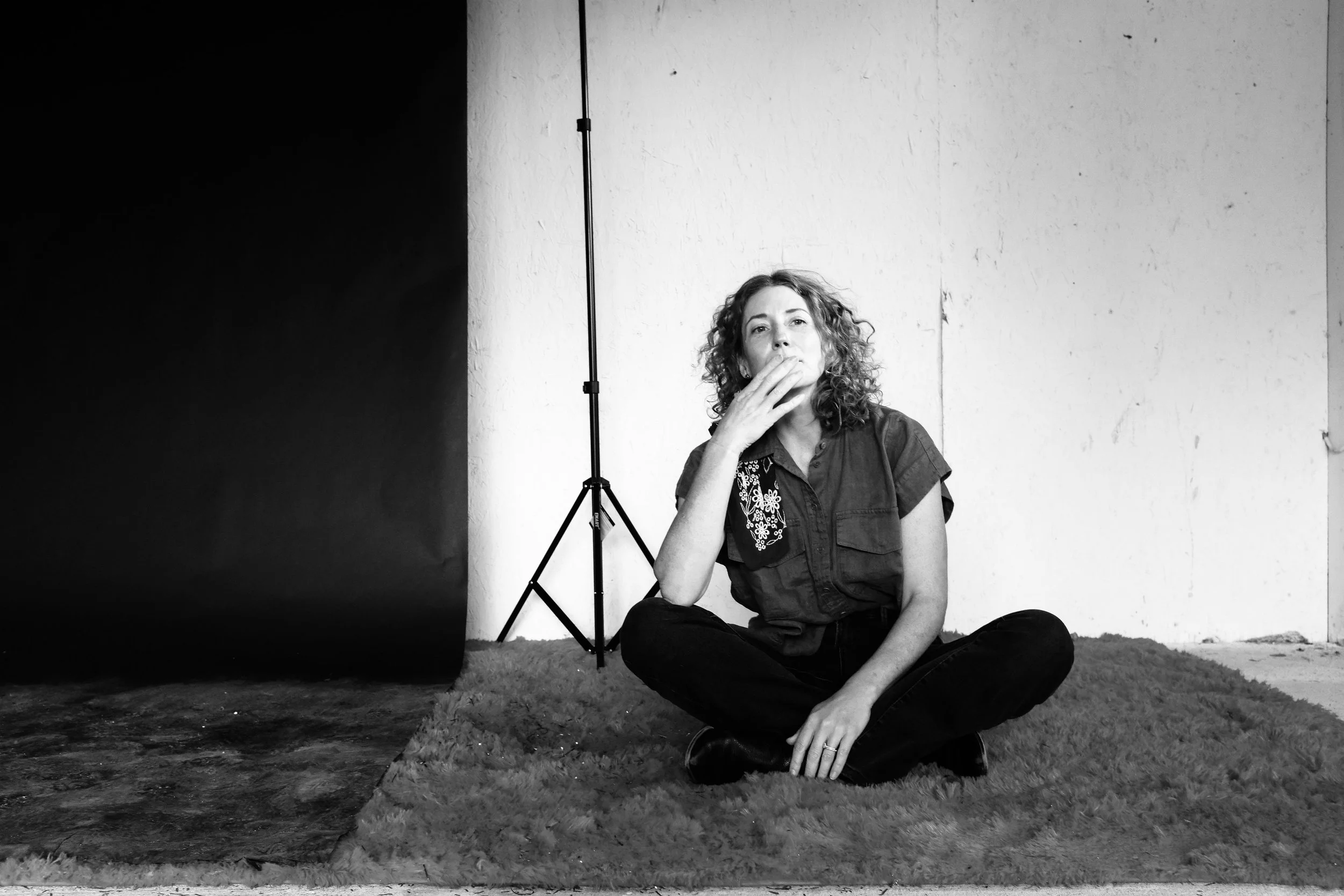
(Photo by Kate York)