
Interview: Hayes Carll
When Hayes Carll was in his 20s, still cutting his teeth as a scrappy, sharp-tongued Texas troubadour, he had the opportunity to co-write with one of his heroes: Guy Clark.
But when the Grammy winner and Nashville Songwriter Hall of Fame member sent back a few notes and minor suggested edits to what would become “Rivertown,” Carll shrugged them off.
“I’m embarrassed to say I remember at the time thinking, ‘Guy Clark’s advice isn’t that relevant,’” Carll, 50, says with a soft laugh. “Then I started to realize it was incredibly relevant.”
It took Carll a few decades and a pandemic to meaningfully process and act on his elder’s insights. Sidelined at home in 2020 for the first time in his career as a touring musician, he recalibrated his creative process. He looked back at songs from his early catalog that — with the benefit of space, time, and stillness — felt rushed or incomplete.
“Once you let a song go, it needs to be what you wanted it to be,” he explains. “I started paying a lot more attention to those details and now, when I let a song go, I feel like it’s what I wanted it to be with more peace of mind.”
That discipline shaped his 10th album, We’re Only Human — a deeply personal 2025 record that trades traces of his signature swagger for presence, tenderness, and humility. Carll brings those songs and more to The Grey Eagle on Wednesday, Nov. 4, with his band. But before he hits the road, Asheville Stages caught up with him via phone from Austin, Texas, on the afternoon of Halloween.
Jay Moye: You’re starting your next run here, which is exciting for us and I hope for you, too. Your Grey Eagle show happens to fall the day after the election, which must be an interesting night for a gig. How do you feel about that?
Hayes Carll: I hadn’t thought much about it until we were booking the tour. I wanted to start the night before, and then my agent pointed out that it was election night and maybe that wouldn’t be a good idea. I’ll certainly be aware and following it. As far as whether it affects the show, unless something really weird goes down, probably not.
The point of a lot of the music I make these days, or at least the theme I’m trying to get across, is that we have more in common with each other than we do that divides us. I find I’m a lot better off spiritually and personally, in every way, when I lean into that instead of starting with our differences. So hopefully, whichever way things go, it’ll give folks a chance to reset and try to find the best in each other again.
It’s really fun to kick things off in Asheville, which is one of my favorite towns. I think the first time I played The Grey Eagle I was opening for Todd Snider more than 20 years ago. I still have vivid memories of that. It’s one of my favorite spots, and I’ve got a lot of great friends in town I’ve known for a long time. All the elements are there to make it the perfect place to start for us.
North Carolina was the first state I played, outside of Texas and Arkansas — where I went to school — where I got positive feedback. It was one of the first places where people were nice to me [laughs], let me sleep on their couches, gave me moonshine. I’ve always felt a connection to the area. I love the mountains and the forests and all the landscape around it, and I love the vibe. It’s similar to what I loved about Austin for so long: it’s got the creative bent, and people let their freak flags fly and generally seem to focus on the positives in life.
JM: You’ve been out supporting We’re Only Human since last summer. How have these songs evolved on stage?
HC: It’s a really personal record for me. I was just trying to figure out how I wanted to live life, treat people and treat myself, and the mindset I wanted to have. I was taking stock and finding things that worked for me and digging into them.
What’s been really cool and kind of profound is sharing it with people and finding what connects. I get feedback on things I wrote for myself personally, and I see that a lot of people relate to them. Sometimes the songs evolve that way, and the crowd interaction and response gives them a certain life that’s really gratifying. I love playing a song of any kind that people dig for whatever reason, but when it’s something about finding peace internally or connecting with each other externally, it’s an extra special element to experience. I tend to walk out of the shows more these days with a real feeling of satisfaction.
Musically, I’m leaning into that and having the freedom to explore. I’m no virtuoso. I play my handful of chords and do my little picking patterns and try to spit out my thoughts. But I’ve got a really talented band. That, combined with the audience, helps me take those songs to places I didn’t know they could go.
JM: You mentioned being in a good place spiritually. Without overstepping, what changes have you made, and how is your perspective and outlook different than it was a handful of years ago?
HC: I don’t know that it’s anything unique to me. I think it’s a lot of problems people struggle with, pretty universally. For me, there’s the constant battle with being present and appreciating my life as it rapidly goes by. I was about to turn 50 when I was writing the record, and my son was growing up. I’ve had a pretty mixed track record with relationships — a lot of good and bad and challenges on that front — and I’d felt adrift for a long time.
I’m a really blessed human in so many ways, and I couldn’t shake the idea that if I’m not happy or content with all the blessings I have, that’s on me. There’s something I’m not doing right here. So it was just resetting, trying to humble myself, and be more present. Everything from trying to have a whole lot more gratitude for the things and the people in my life — my blessings — to trying to connect with myself and others in a way that helps me stay grounded and centered and find that commonality.
I think some of our biggest struggles as human beings are pain and loss and frustration and lack of grounding. Finding purpose. Basically, I tried to stop spinning out as much and find the things in my life that were solid and timeless. On a day-to-day level, that’s more time in nature and investing in friendships and relationships.
And I use a trick: If I’m taking an action or having a thought, I try to think, “Would eight-year-old me be proud of what I’m doing here? Would 80-year-old me approve or be proud?” That helps me zoom out a bit and remember what’s important and whether I’m on the right track or not.
JM: How does that show up in your writing — not necessarily in your lyrics, but in your process?
HC: In a couple of ways that come from a few different places. Around 2020, when the [COVID-19] pandemic hit, I started really appreciating what I had. And I had a lot of time. It was the first time in my adult life when I wasn’t on the road and got to be home like a normal person, not in all the insanity of traveling year-round. I started thinking about how and what I wrote.
I’m pretty ADD. For so long, I was inspired by the Dylans and the Kerouacs. My understanding of what they did was this very catch-lightning, stream-of-consciousness approach. When that worked, it was great. But what I didn’t realize was that both of those guys had periods where they put a whole lot more into their work, and that didn’t get the headlines. They rewrote and redrafted a lot. It wasn’t all drug-fueled, inspirational bursts of creativity.
I started working on the craft a lot more. There were quite a few songs I’d written in the past where I’d look back and say, “I left something on the table there. I didn’t say exactly what I wanted to say.” And that was nobody’s fault but my own. So I started thinking, “If somebody else sang this song, would it come through the way I wanted without me delivering it with a wink and a nod or a vocal inflection? Can the song stand on its own?”
I got much more intentional about crafting and editing and rewriting. I also started being more intentional about some of the subject matter. With things that are important to me, that I feel are significant or want to hang on to or articulate in a specific way, I try not to let the song go until I’ve done that. I always had the inspiration part I could chase down, but I now realize that’s just one part of it. If my job is to be a professional songwriter, then I should focus a bit more on the actual craft part.
JM: That leads into my next question. I interviewed M.C. Taylor (Hiss Golden Messenger) a few days ago. He had a great quote about his songwriting process, which he described in part as just needing to “get the reps in.” I’d love to hear how you hooked up with him to collaborate on your song, “Stay Here Awhile” from We’re Only Human, and why you pulled him in to flesh it out.
HC: I’ve been a fan for a long time, but we’d never met. He was coming to town and somehow we worked it out so we could get together and write. It’s a funny story. He flew in, got a rental car, and drove over to my house in Nashville. I was in my late 40s, and my sartorial vibe was of a certain type: singer/songwriter around the house, meditating a lot. I was wearing some kind of khaki pants, Turkish slippers, and a collarless Hindu shirt. He pulls up in his car, and before he gets out he just looks at me. I see him and go out to greet him, and he just shakes his head and gets out of the car wearing the exact same thing. [laughs]
We found out we’re the same age. And I thought, “This is probably going to go well.” We sat down on my back porch and I had the title for “Stay Here Awhile,” which is just about being present and appreciating and recognizing that a lot of your peace and happiness comes from within, and trying to hang on to that when you find it. We connected on that level and got most of the song knocked out in a few hours. It was a really cool experience.
JM: You’re known for lacing your lyrics with a sly sense of humor. Given the shift in perspective you’ve embraced over these last few years, is it harder now to write a “funny” song than it is an honest song?
HC: I wouldn’t say that. I think my mind’s always gone to both places. I grew up on humorous stuff, and I’m always internally making up rhymes. I was making something up last night that annoyed the person I was with because it was so absurd. But I’ve also always been really moved by poets, authors, actors, and just people in life. Any time there’s something that feels meaningful and profound and poetic, I’m very drawn to that as well.
I enjoy exercising both of those muscles and trying to get better at them, and I don’t think I’ll ever lose my enthusiasm for either style. I think life is all of it. It’s good to be able to laugh and poke fun at ourselves and be absurd, and it’s also good to be reminded of what’s important and what’s meaningful. I love when I can combine the two for myself. And sometimes it’s fun just to let off steam and rock out. I try not to take myself too seriously. I can talk for a long time about myself, but I’m just figuring it out as I go and trying to find what works for me. All those things are additive to my life, so I like including them all in my music.
JM: In the press materials for We’re Only Human, you talk about a voice riding shotgun with you all your life, pushing you to do better, and you’ve often struggled to listen to that voice. What does that voice sound like to you these days, and has it gotten easier to hear?
HC: That voice changes every day. I’m definitely trying to check in with it a lot more and not ignore it as much. There have been a lot of times when that voice, which might be my inner spirit or conscience, was saying, “This isn’t the right move, man. This is not going to be good to you. You know better than this. You should have a boundary on this.” Or, “This is not helpful for you.”
And the other part of me that just wanted to feel good or check out or not deal with reality so often overruled it. That’s still a challenge to this day. But if there’s any growth I’ve had, that’s certainly an area where I pay a whole lot more attention. I try to check in daily in some way or another, and if I’m consistently recognizing that I’m ignoring my better angels, that’s going to lead to a bad path. There’s something to do there. Whether it’s once a week or 20 times in a day depends on how I’m sailing the ship.
The more I can let go of my own thoughts and ego and check in with my heart and my spirit and see what’s real, the more it guides me in a way that I maybe ignored a lot more than I should have in the past. It’s a journey and a process, but I feel like I’m doing a whole lot better. And my days and minutes are a whole lot better as a result.
IF YOU GO
Who: Hayes Carll with Joelton Mayfield
When: Wednesday, Nov. 4, 8 p.m.
Where: The Grey Eagle Music Hall, 185 Clingman Ave., thegreyeagle.com
Tickets: $32.81
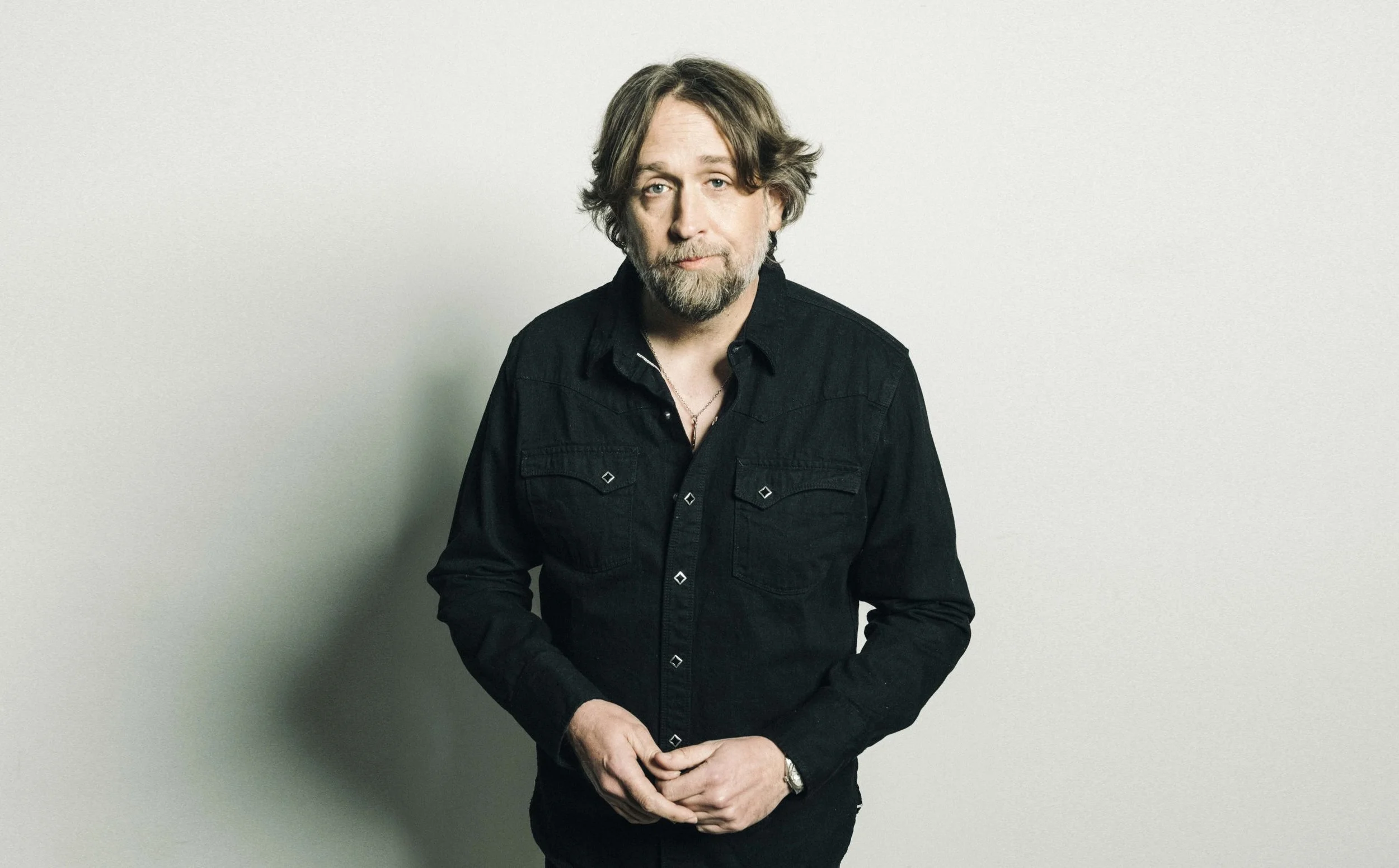
(Photo by Joshua Black Wilkins)